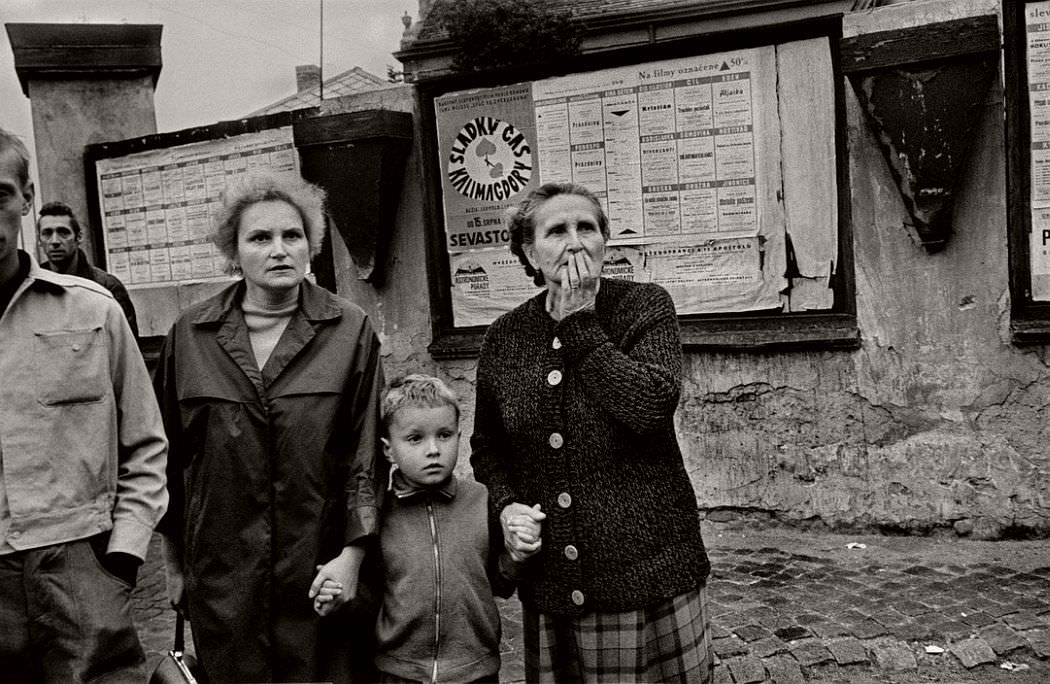
Faces in the crowd tell the story of August 1968 as sharply as any headline: a woman stares ahead with a fixed, guarded expression while an older woman covers her mouth, cigarette in hand, as if bracing for what comes next. A small child stands between adults, held close, the everyday vulnerability of family life suddenly exposed to the shock of troops and tanks arriving to end the Prague Spring. In the background, public noticeboards and torn posters underscore how ordinary streets became stages for fear, confusion, and hurried rumor.
Set against the wider Soviet-led invasion of Czechoslovakia, the photograph leans into the civilian experience rather than the machinery of occupation. The tension is quiet but unmistakable—people watching, waiting, and listening, with no clear sense of where safety might be found. That sense of suspended time captures the psychological weight of the crackdown: reform hopes colliding with an overwhelming show of force.
For readers searching the history of the Prague Spring and the Warsaw Pact intervention, this image anchors the narrative in human detail—hands clasped, eyes scanning, breath held. It evokes the streets where information moved through glances and fragments of conversation long before official statements could be trusted. As a historical photo for a WordPress post on the Soviet invasion of Czechoslovakia, it invites reflection on how quickly political change can transform daily life, and how civilians carry the first, most intimate costs of occupation.