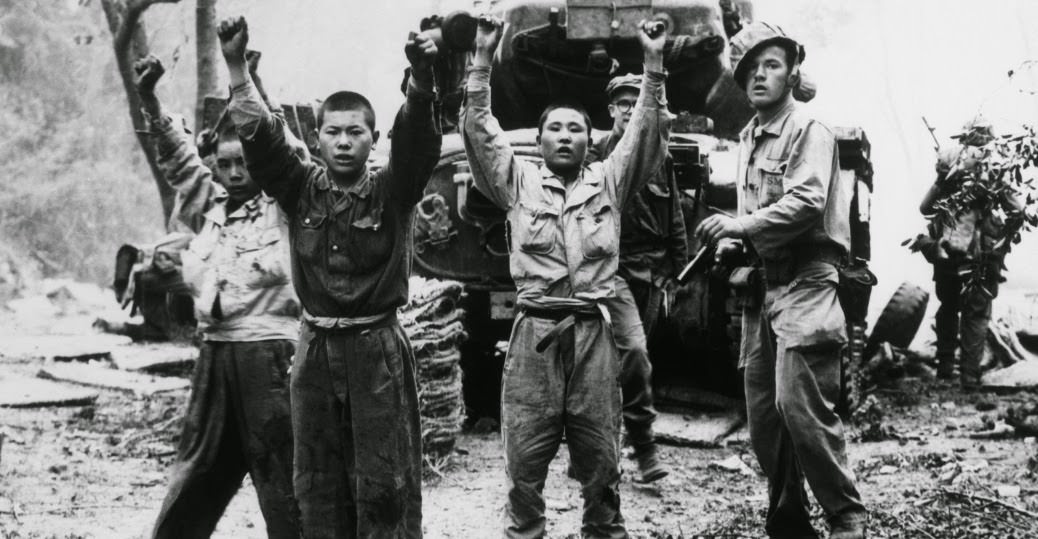
Arms lifted high in surrender, a small group of captured soldiers stands in the churned-up rubble of war, their faces tense and exhausted as they look toward the unseen captors. Behind them, a tracked armored vehicle looms large, its steel mass and stowed gear emphasizing the industrial scale of the fighting. The stark contrast between raised hands and heavy machinery turns the scene into a blunt snapshot of power shifting on the battlefield.
In the context of the post title, the moment aligns with the shockwave created by General MacArthur’s surprise amphibious landing at the port of Inchon on September 15, 1950. That gamble—risky tides, tight timing, and all—helped U.N. forces break the momentum of the invading North Koreans, turning a desperate defensive war into an offensive one. The capture of prisoners, the presence of armored support, and the wrecked ground all echo the rapid reversals that followed as supply lines were disrupted and front lines unraveled.
War photography often compresses sweeping campaigns into human-scale decisions made in seconds, and this frame does exactly that. It hints at the larger operational story—Inchon, the drive inland, and the push toward Seoul—without needing maps or slogans, letting body language and battered terrain tell the tale. For readers searching Korean War history, Inchon landing photos, U.N. victory accounts, or the early turning points of 1950, this image offers a sobering doorway into a pivotal chapter of the conflict.