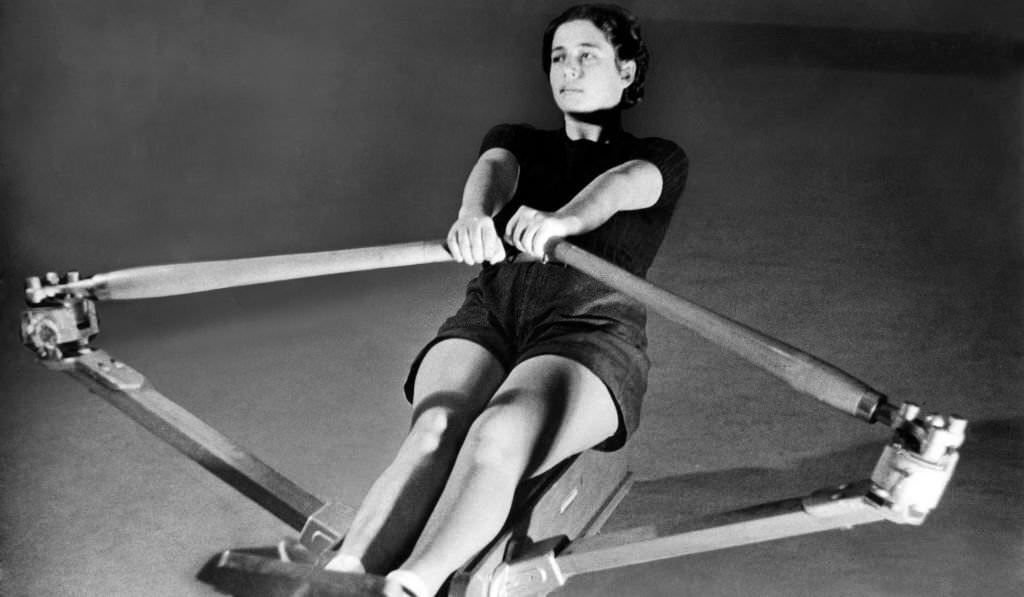
A university gym class in 1939 could feel half like a science lab, half like a drill, and the equipment in this scene makes that clear. One student sits upright with a steady, concentrated expression, gripping a long bar attached to a triangular metal frame. The clean background and tight composition pull attention to posture, control, and the mechanics of movement—fitness presented as something measured and disciplined rather than casual.
Those “weird exercise machines” from the past weren’t gimmicks so much as early attempts to standardize training and build strength efficiently. The sliding rails, hinged joints, and levered handle suggest a rowing-style motion, designed to work the arms, shoulders, and core while keeping the body aligned. In an era before modern gyms were packed with chrome and digital readouts, universities often embraced apparatus-based physical education to cultivate endurance, coordination, and good form.
Viewed today, the photo offers a fascinating snapshot of sports history and campus life on the eve of major global change. It also speaks to a longer story of how workout methods evolve: the goals—strength, stamina, and health—remain familiar, even when the machines look unfamiliar. For readers interested in vintage fitness, historical gym equipment, and 1930s university routines, this image is a vivid reminder that “modern” exercise has deep roots.