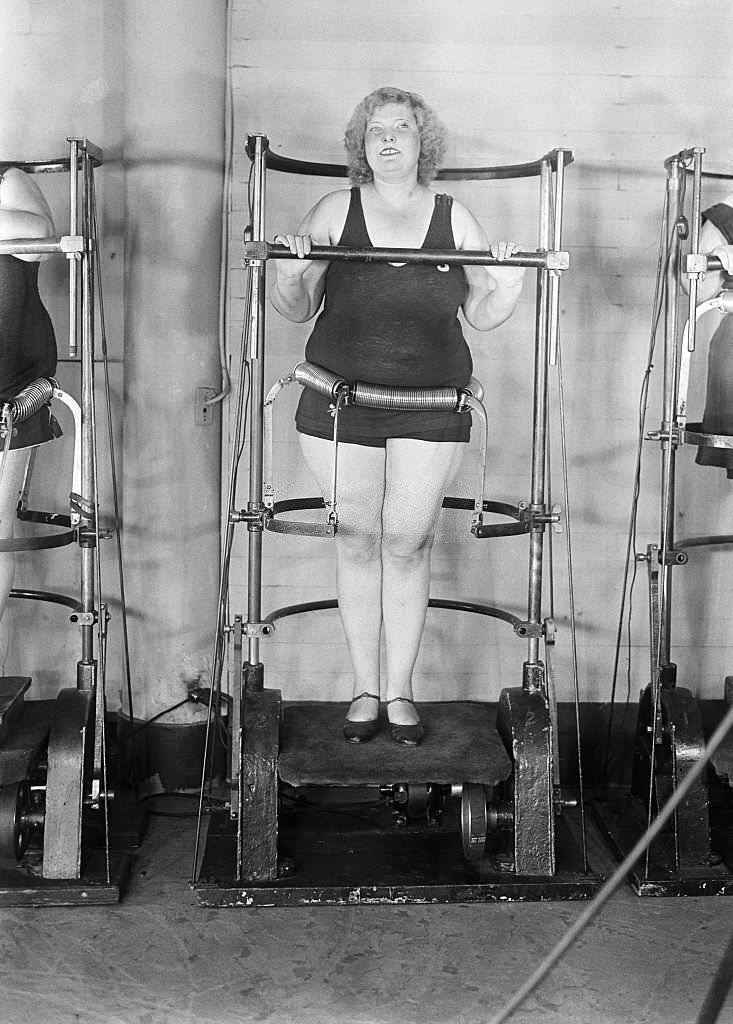
Centered on a sturdy platform, a woman grips a horizontal bar while standing inside a tall, metal exercise frame that looks part gym apparatus, part industrial contraption. Curved supports and spring-like rollers wrap around the midsection, hinting at a workout method that promised results through pressure, vibration, or guided movement rather than sweat alone. The spare room, plain wall, and neighboring machines at the edges suggest a dedicated fitness studio where mechanical ingenuity was as important as the person exercising.
Equipment like this speaks to an era fascinated by “scientific” body culture—when health, reducing, and posture were often marketed through devices that could be adjusted, calibrated, and sold as modern solutions. Instead of free weights or cardio routines, the focus here seems to be on targeted shaping, with the machine doing much of the work while the user stands poised and compliant. It’s an early snapshot of the long relationship between fitness trends and technology, where every decade introduces a new tool said to be smarter, faster, and easier.
For anyone browsing weird exercise machines and workout methods from the past, the scene is both amusing and revealing: the desire to improve the body is timeless, but the methods change dramatically. The photo invites closer attention to the engineering details—rails, pulleys, pads, and rollers—designed to turn personal training into a controlled mechanical process. As a historical sports and fitness image, it captures how gym culture once blended optimism, invention, and a touch of the uncanny.