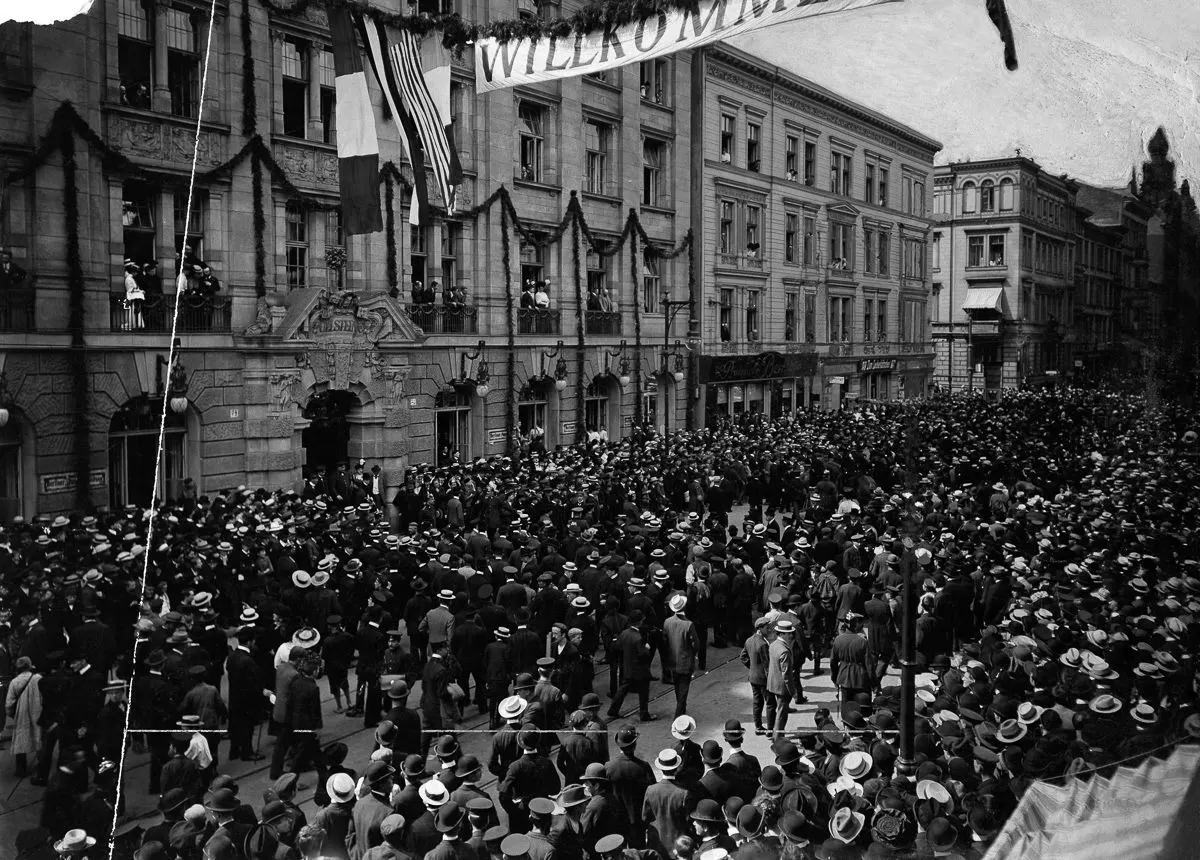
Berlin’s streets look almost tidal here, a dense sea of hats and dark coats pressed up against a grand stone façade dressed in bunting and flags. A large “WILLKOMMEN” banner stretches overhead, turning the roadway into a ceremonial gateway as onlookers lean from windows and balconies to catch the first glimpse of the incoming racers. The scale of the crowd tells its own story: long-distance motoring had become a public spectacle, and the city responded like it would for a parade.
Moments like this help explain why the Great New York to Paris Auto Race gripped audiences far beyond the competitors themselves. In an era when automobiles were still proving their reliability, each arrival in a major city functioned as both checkpoint and theater—machines, crews, and endurance put on display for thousands of curious witnesses. The formal decorations and packed sidewalks suggest an official welcome as well as a popular fascination with speed, engineering, and modern travel.
Looking closely, the photograph becomes more than a record of a sporting event; it’s a snapshot of urban life meeting technological change in real time. The orderly massing of spectators, the architecture framing the route, and the celebratory signage combine to convey the excitement that followed early international motorsport across borders. For readers searching Berlin history, early auto racing, or the New York to Paris race through historic photos, this scene captures the moment when a city turned the racers’ arrival into a communal celebration.