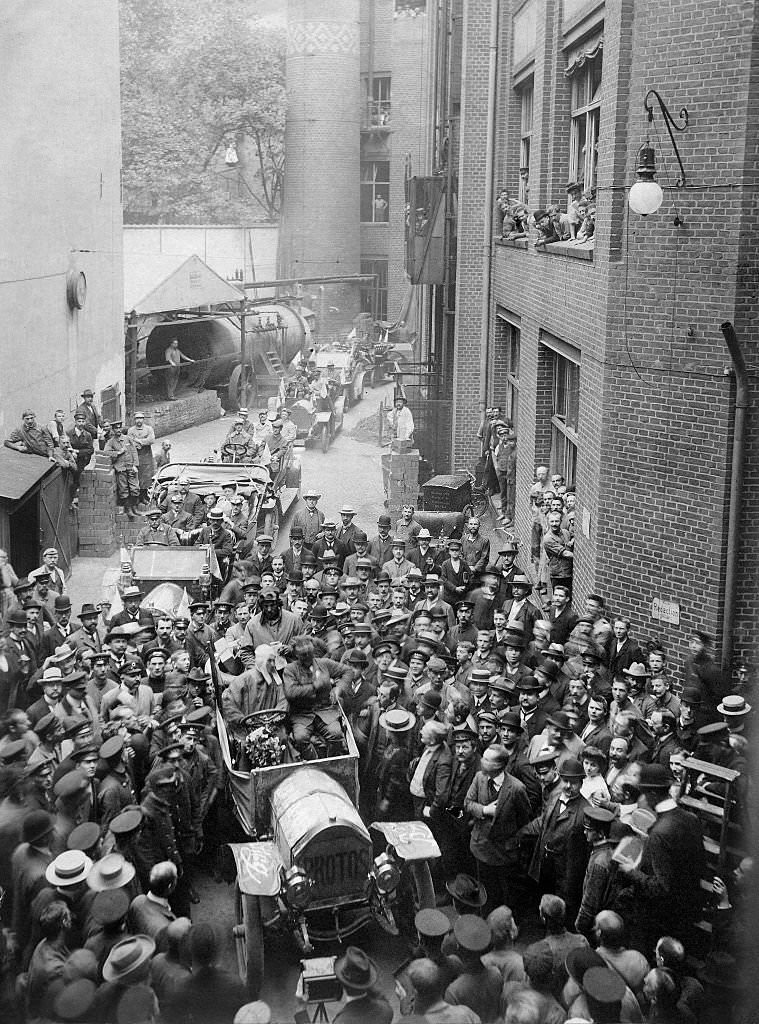
Crowds press into a narrow city lane, hats tilted and shoulders packed tight, as an early motorcar edges forward beneath brick walls and factory windows. Faces spill out from doorways and upper-story ledges, turning an ordinary passageway into a grandstand, while the vehicle’s tall lamps and boxy bodywork announce the new age of endurance motoring. The scene carries the charged mix of curiosity and awe that followed automobiles wherever they dared to go in the early 1900s.
Berlin is named in the post title, and the photograph feels like a stop on a long, hard road—one where mechanics, drivers, and onlookers all played their part in keeping the spectacle moving. The legendary New York to Paris car race of 1908 lasted more than seven months, and images like this hint at what that meant in practice: tight streets, improvised logistics, and a constant negotiation between machine, crowd, and city infrastructure. Even without a finish line in view, the moment reads as public theater, with industry and everyday life forming the backdrop.
For readers searching the Great New York to Paris Auto Race of 1908, this photo offers more than a glimpse of a vehicle; it preserves the social atmosphere surrounding early motorsport and the global fascination it generated. The density of the crowd, the brickwork and industrial setting, and the sense of motion squeezed into limited space all underscore how extraordinary such a transcontinental challenge seemed at the time. It’s a vivid historical snapshot of endurance racing history, urban spectatorship, and the early automobile’s power to draw the world to the curb.