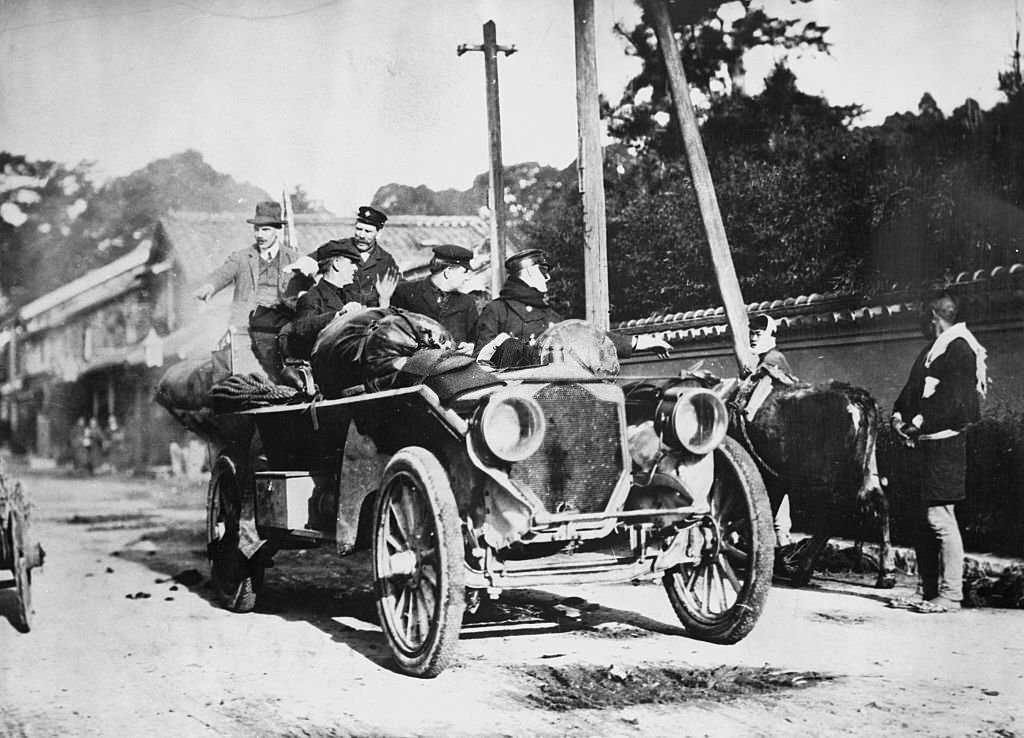
Rolling through Kobe’s streets, the Thomas Flyer appears less like a showpiece than a hard-used machine still wearing the road. Its tall headlamps and open cabin frame a bundle of gear lashed down with care, while bundled-up riders sit upright against the wind and dust, signaling the long-distance grit behind this triumphant passage.
What makes the moment so vivid is the meeting of worlds around the car: wooden utility poles, low buildings, and a few onlookers watching the foreign automobile rumble past, even sharing the roadway with animals. Early motoring was never isolated from daily street life, and the photo hints at the noisy, improvisational reality of travel before paved highways and standardized traffic.
As part of the Great New York to Paris Auto Race of 1908, the Thomas Flyer’s victory run through Japan underscores just how global—and precarious—early automotive sport could be. For readers drawn to vintage racing history, Kobe, or the evolution of endurance driving, this historic photograph offers a textured snapshot of ambition on wheels: engineering, endurance, and spectacle squeezed into a single street scene.