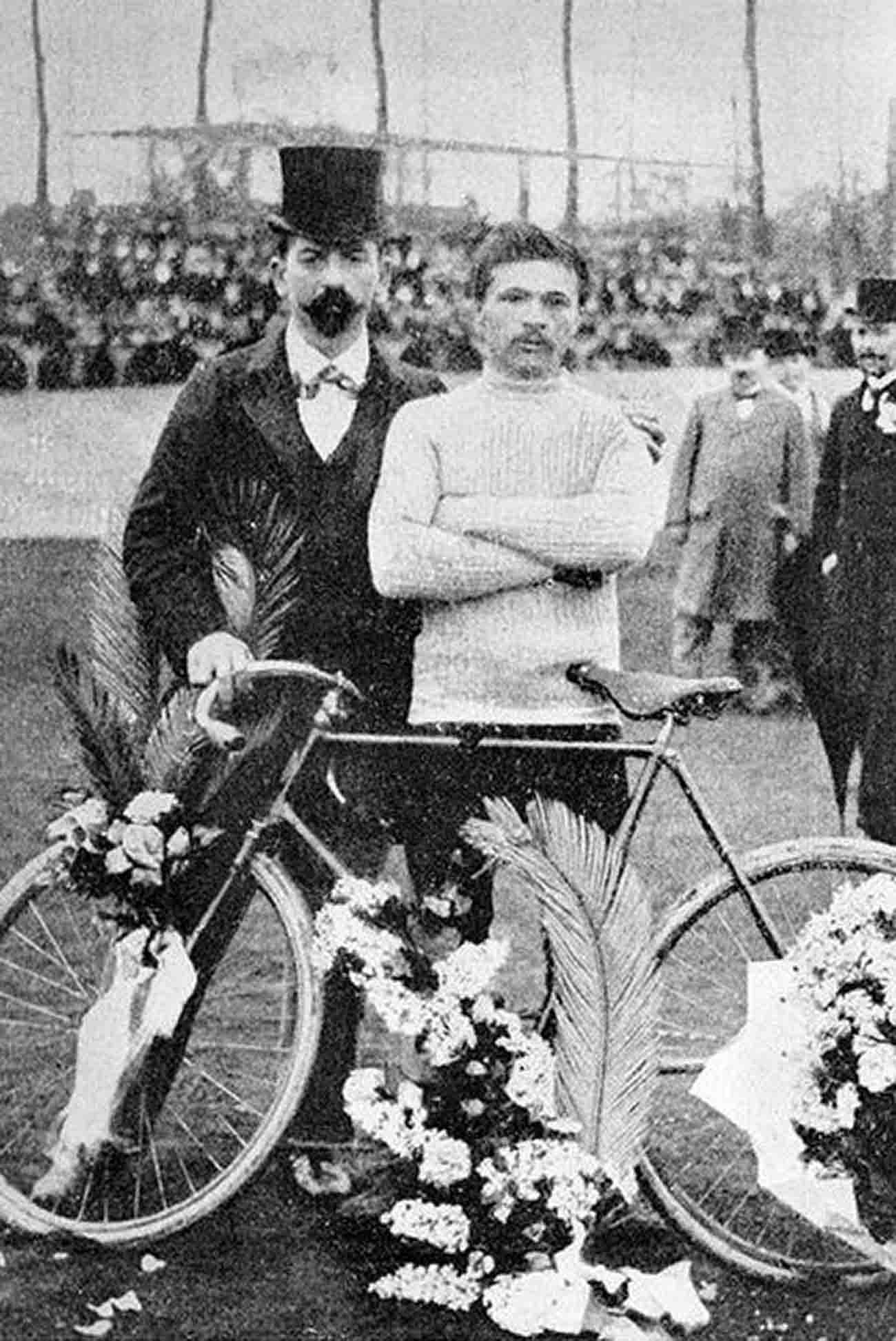
Maurice Garin stands with arms folded beside a bicycle dressed in flowers, the kind of celebratory touch that instantly signals victory. His simple racing kit and calm, steady gaze contrast with the formal figure next to him in a dark suit and tall top hat, hinting at how early cycling heroes moved between working-class grit and public ceremony. Behind them, a dense crowd blurs into a textured backdrop, suggesting the growing spectacle that surrounded road racing at the dawn of the 20th century.
Taken in the context of the first Tour de France in 1903, this portrait-like moment speaks to a sport still defining itself. The bicycle’s slender frame, upright posture, and minimal equipment evoke an era before modern teams, carbon machines, and support caravans—when endurance and improvisation were part of the legend. Even without a visible podium, the floral decorations and the presence of officials and onlookers feel like a finish-line tribute to the man who outlasted the inaugural field.
For readers exploring historical Tour de France photos, this image offers a vivid doorway into early professional cycling and the making of sporting celebrity. It pairs well with stories about how the race was promoted, how crowds gathered, and how winners were presented to the public with almost theatrical formality. Whether you’re researching Maurice Garin, the 1903 Tour de France winner, or the broader history of cycling, the scene captures the moment when a new tradition began to look timeless.