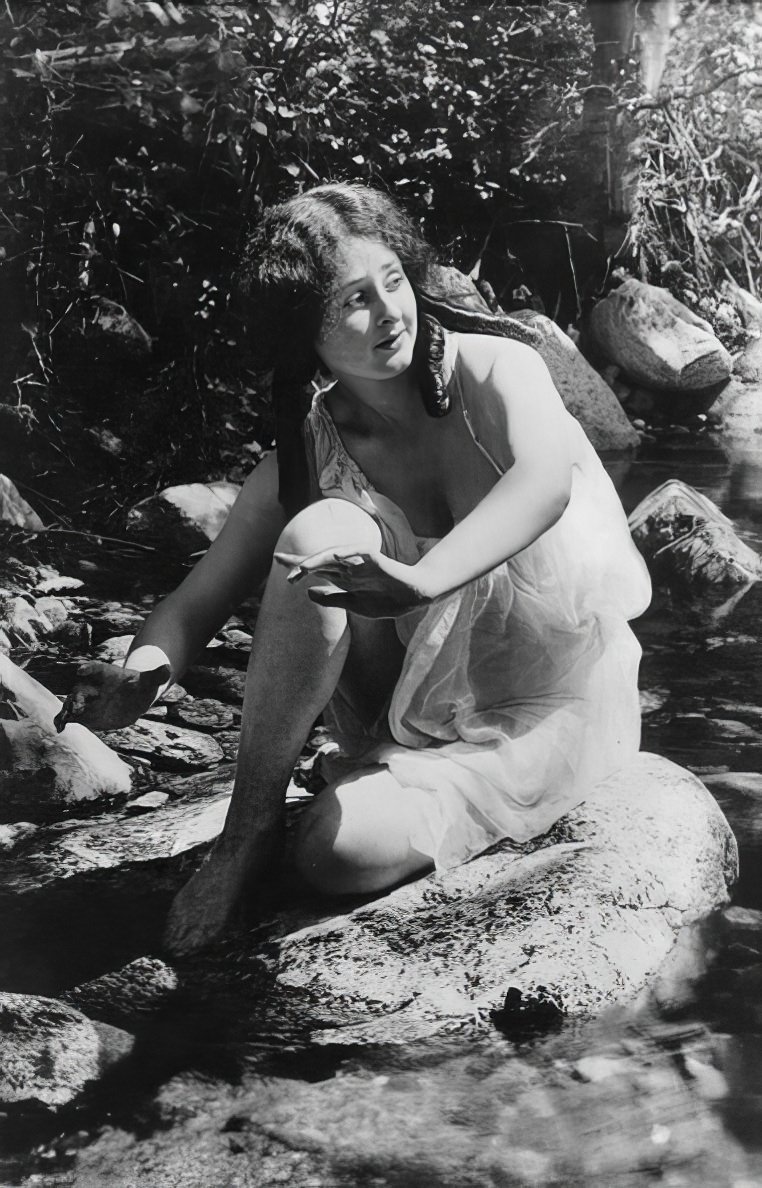
Sunlight filters through dense foliage and lands on a young woman seated on smooth river rocks, her gaze turned to the side as water eddies around her ankles. The scene feels more like a quiet summer interlude than a staged studio moment, with soft shadows and a candid posture that draws attention to texture—wet stone, rippling current, and the airy fabric draped over her knee. Even without a named beach or a precise date, the photograph invites us into the early 1900s world where leisure, nature, and fashion were becoming newly entwined.
What’s especially striking is how the garment reads as a transitional form of swimwear: modest in coverage yet lighter and more fluid than the heavy, restrictive bathing costumes that dominated the late Victorian era. The loose, sleeveless cut and delicate layers suggest the period’s gradual shift toward practicality and comfort, while still honoring expectations of propriety through drape and opacity. In images like this, changing women’s swimsuits aren’t just about hemlines; they mirror evolving ideas about women’s movement, visibility, and autonomy in public spaces.
Set within the broader story of “bathing beauties,” this post explores how early 20th-century swim fashion moved from cumbersome wool and structured silhouettes to designs that better suited water, sport, and modern life. Each photograph becomes a cultural document—capturing not only what was worn, but how it was worn, where it was worn, and what it signaled to the world. For readers interested in fashion history, vintage photography, and the shifting boundaries of everyday freedom, these swimsuit changes chart a surprisingly intimate map of social change.