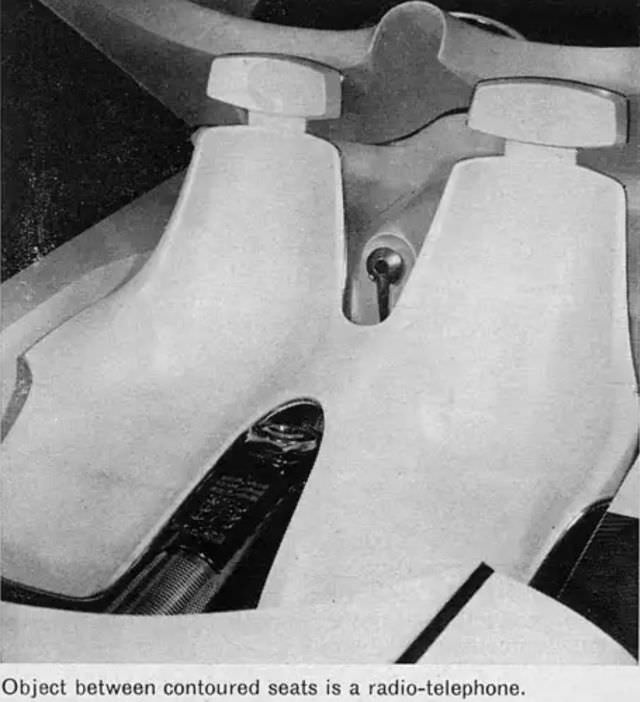
Between two sculpted, futuristic seats sits a small handset—described right in the photo as a “radio-telephone”—a detail that instantly places the 1961 Ford Gyron within an era obsessed with tomorrow. The cabin looks more like a cockpit than a car interior, with smooth contours, minimal clutter, and a central control area that suggests experimentation over comfort. Even in this close view, the Gyron’s purpose comes through: to make the idea of a two-wheeled gyrocar feel believable, modern, and just around the corner.
Ford’s Gyron concept belongs to that early-1960s moment when automakers treated design studios and research departments as showrooms for the future. Two-wheeled “gyro” vehicles promised stability through advanced engineering while projecting efficiency and agility in a compact footprint, and the styling here leans hard into that promise. The radio-telephone isn’t just a gadget; it’s marketing theater, signaling that the vehicle’s innovations weren’t limited to propulsion and balance but extended to how drivers might communicate on the move.
For historians of concept cars and transportation inventions, this photograph offers a useful window into how research prototypes were packaged as public-facing dreams. The emphasis on clean surfaces and integrated technology reflects a broader midcentury belief that streamlined design and electronics would reshape everyday travel. If you’re exploring the story of the Ford Gyron, this interior glimpse underscores what made it memorable: not a production plan, but a carefully staged argument for a future that felt thrillingly plausible.