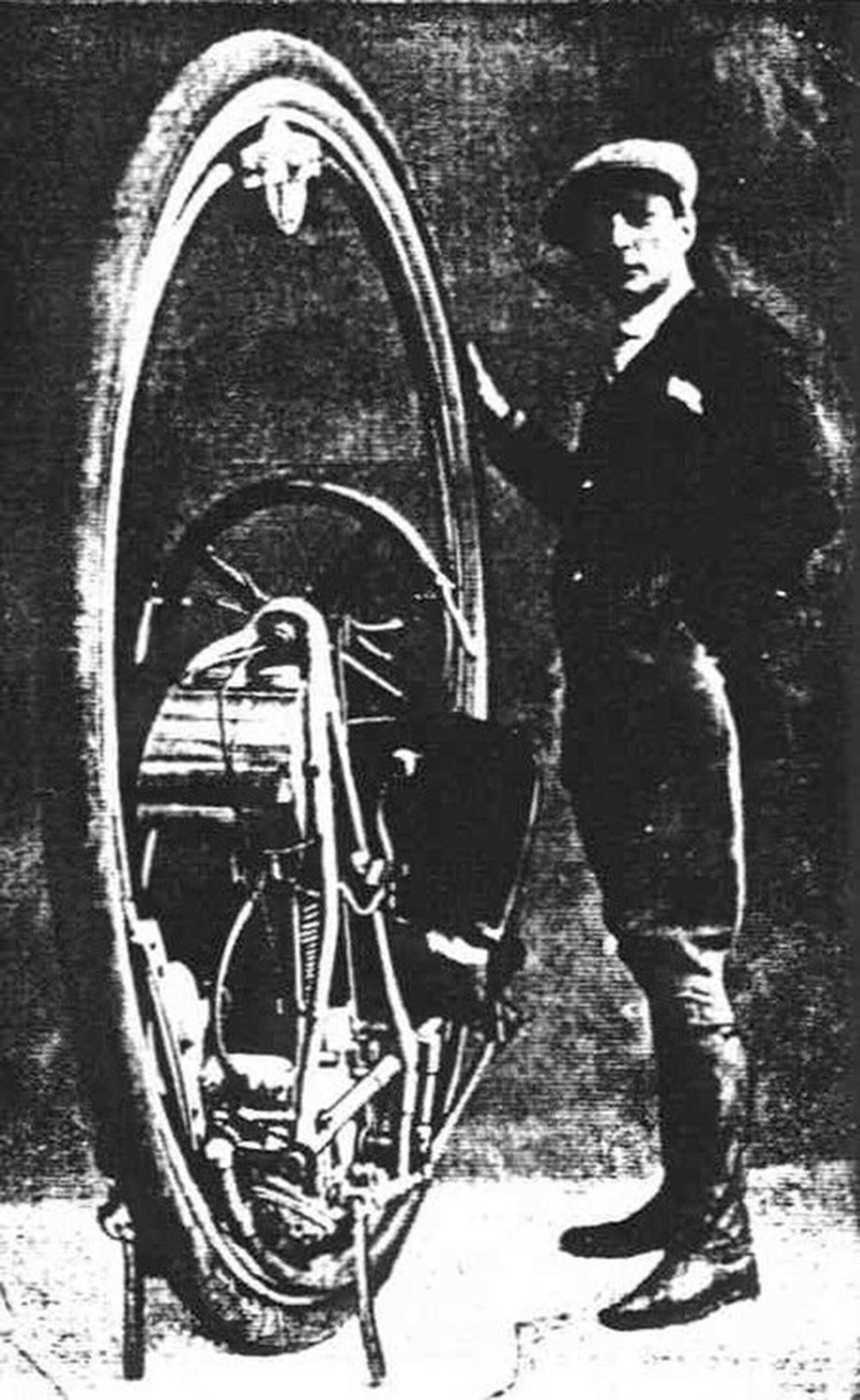
Towering beside its creator, the monowheel in this historical photo looks less like a bicycle and more like an engineering dare—one enormous ring with a compact seat and mechanism suspended inside. The contrast between the man’s formal cap and jacket and the machine’s skeletal spokes and struts hints at an era when inventors were eager to reimagine personal transport from the ground up. Even in grainy black-and-white, the scale is striking: the rider would be carried within the wheel itself, with very little separating ambition from gravity.
Monowheels belong to a fascinating corner of transportation history where “simpler” didn’t always mean easier. Putting the rider inside a single wheel promised reduced complexity and a dramatic footprint, yet it also raised practical questions about balance, steering, braking, and what happens when momentum decides to keep rolling. Photos like this one are invaluable because they reveal the real-world proportions of these bizarre vehicle inventions—the pedals, frame supports, and the tight space where a person would have to control the whole contraption.
Curiosity is the real engine behind these designs, and that’s why monowheel facts still draw readers today. Whether you’re exploring early experimental vehicles, unusual motorcycles, or forgotten mechanical concepts, the monowheel stands out as both clever and precarious, a reminder that progress often comes with detours. This post gathers historical photos and context to show how inventors pushed beyond conventional wheels—sometimes literally—to chase a new kind of ride.