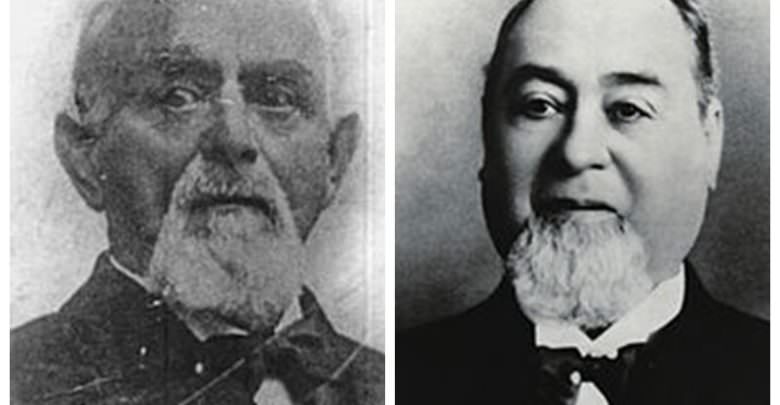
Two formal portraits sit side by side, their subjects dressed in dark coats and high collars, faces framed by neatly kept facial hair and steady, unsmiling expressions. The pairing suits the post title—Jeans (1870s) by Jacob W. Davis and Levi Strauss—because it hints at a partnership between practical workmanship and commercial reach, the kind of collaboration that turns a useful idea into a lasting cultural staple.
In the 1870s, “jeans” were less a fashion statement than a response to hard wear and harder work, built for durability and everyday use. The story most readers associate with Davis and Strauss centers on reinforced work pants—clothing engineered to survive strain at seams and pockets—an invention-minded solution that fits neatly within the theme of industrial-era ingenuity.
Modern wardrobes still echo that breakthrough, from riveted corners to the familiar silhouette that has traveled far beyond its workwear roots. For anyone searching the history of denim, early jeans, or the origins of Levi Strauss and Jacob W. Davis, this post connects a simple archival image to the larger timeline of how a utilitarian garment became one of the most recognizable pieces of clothing in the world.