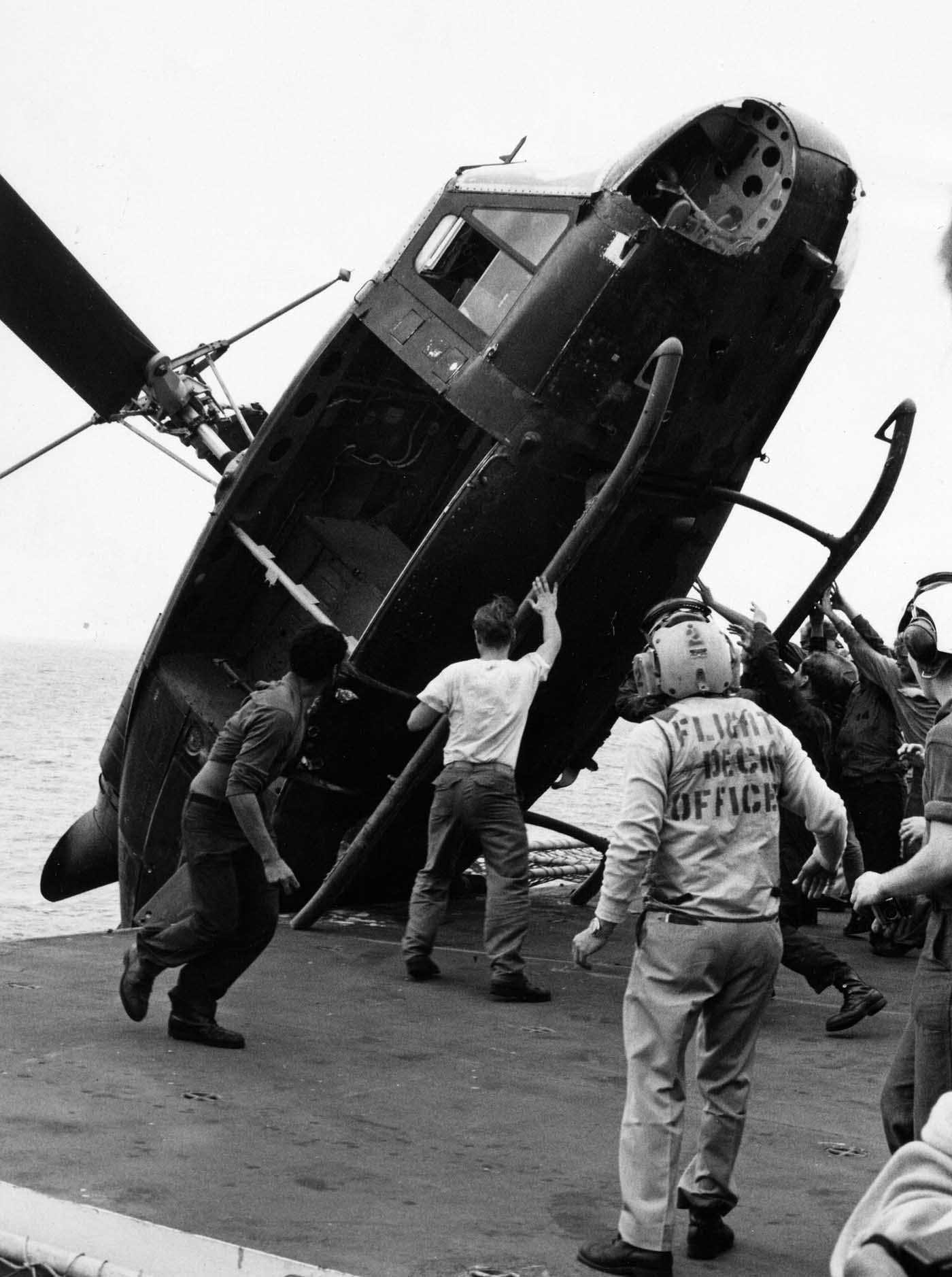
Steel deck, open sea, and a helicopter tipped like a toppled monument—this is a hard-edged moment from the Vietnam War aboard USS Okinawa. Sailors crowd the frame with arms raised and bodies braced, guiding a South Vietnamese aircraft toward the edge so the landing area can be cleared for more arrivals. The stark angle of the fuselage and the blank sky above it amplify the urgency, turning routine deck work into an image of crisis management at sea.
On the flight deck, the “Flight Deck Officer” stands out amid the motion, a visual reminder that every second depended on tight coordination. The helicopter’s rotor and landing gear cut across the composition, while the ocean sits just beyond the ship as an unforgiving backdrop. Nothing here reads as ceremonial; it’s the practical, dangerous choreography of naval aviation when space runs out but helicopters keep coming.
History often remembers the big decisions, yet photographs like this highlight the improvisation that followed those decisions—how an amphibious assault ship became a refuge and a bottleneck all at once. Pushing an aircraft overboard feels shocking to modern eyes, but the title makes the logic clear: deck space meant survival, throughput, and the ability to receive the next helicopter. For readers searching Vietnam War helicopter photos, USS Okinawa flight deck scenes, or evacuation-era naval images, this frame captures the tense calculus of an overcrowded deck and a war closing in.