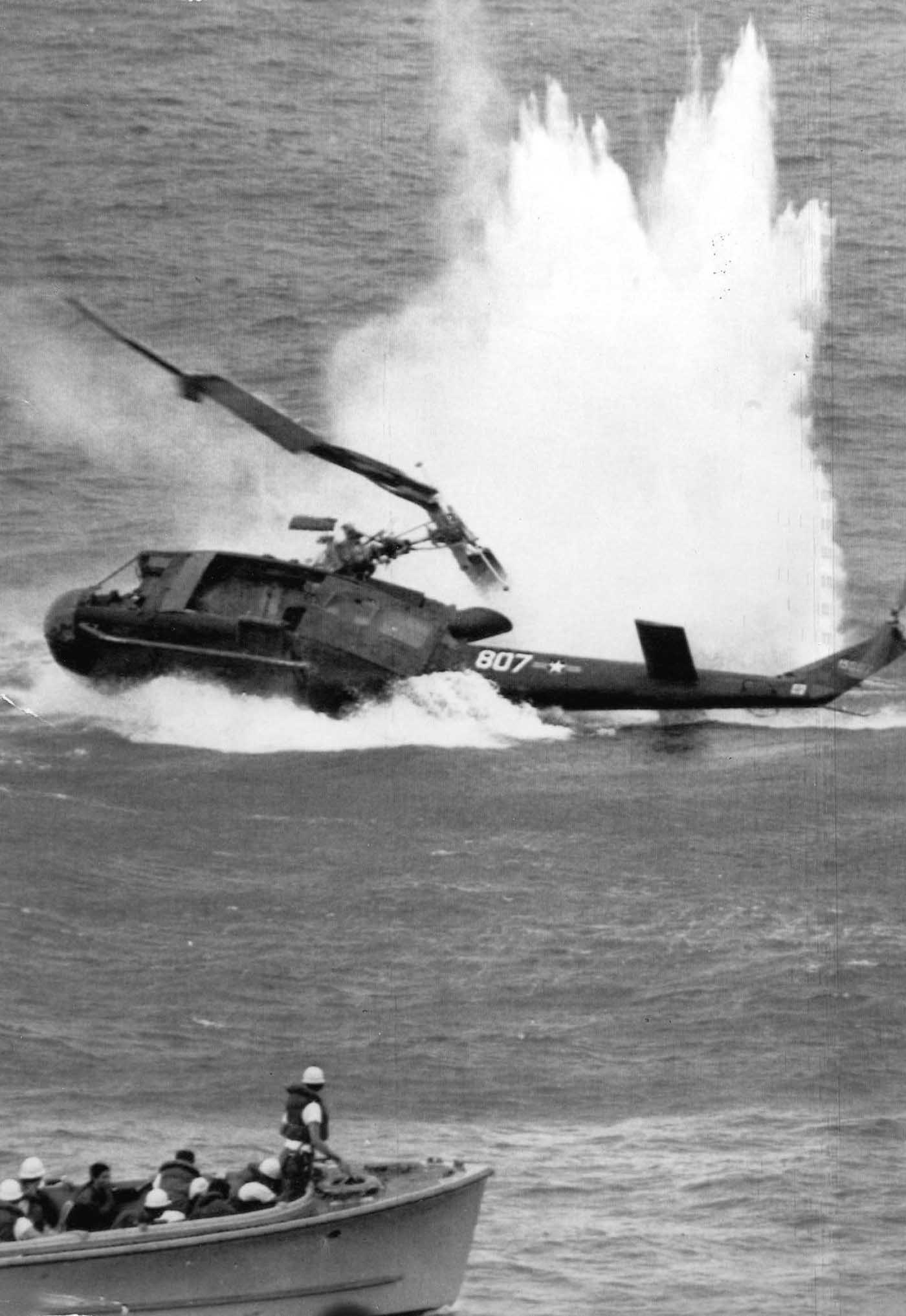
A helicopter hits the sea in a violent splash, its rotor blades frozen mid-collapse as the aircraft begins to disappear beneath the waves. In the foreground, a small boat packed with helmeted sailors watches from a short distance, underscoring how close-quarters and improvised the scene was. The stark contrast of dark fuselage against bright spray makes the moment feel both sudden and irreversible.
The title points to the final days of the Vietnam War, when U.S. forces faced a brutal arithmetic at sea: deck space and minutes mattered more than machinery. In evacuations, helicopters arriving faster than they could be handled sometimes had to be pushed or dumped overboard to clear room for more incoming aircraft—and, most importantly, for evacuees. The photograph communicates that hard choice without needing a single captioned statistic: saving people meant sacrificing equipment.
As a piece of Vietnam War history, the image also captures the logistical drama of naval evacuation—ships, crews, and aircraft operating at the edge of capacity. For readers searching for “1975 Vietnam evacuation” or “helicopters pushed overboard,” this scene offers a direct visual entry into that chaotic endgame. It’s a reminder that the war’s closing chapter was written not only on land, but on crowded decks and open water where decisions were measured in lives.