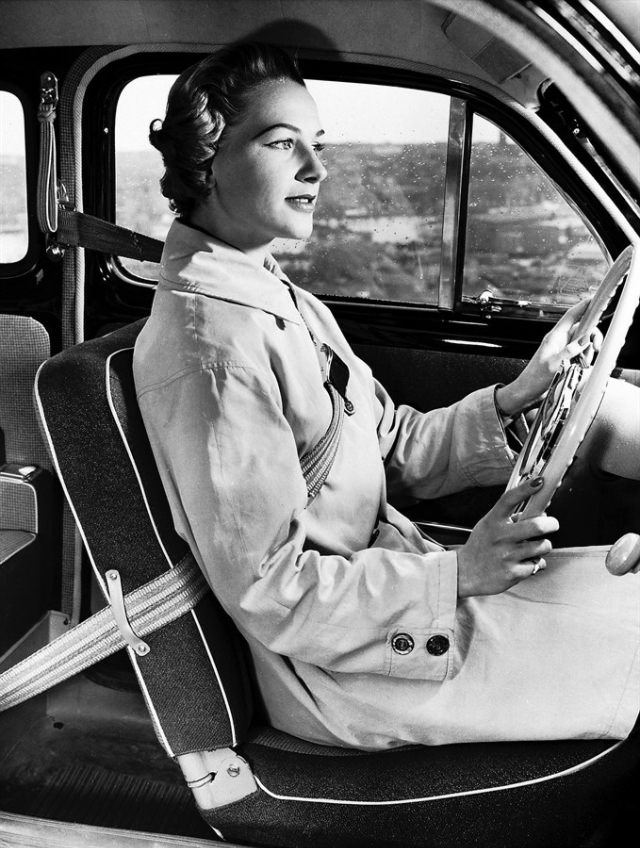
A poised driver sits behind a large steering wheel, framed by the clean lines of a mid-century car interior, while a wide V-shaped three-point safety belt runs across the chest and lap. The belt’s anchor points and sturdy webbing are clearly visible, turning what once looked like an optional accessory into a purposeful piece of engineering. It’s a striking reminder that the most influential inventions often blend into everyday life, right where we least expect to notice them.
Volvo’s three-point seat belt changed automotive safety by distributing crash forces across stronger parts of the body and helping prevent ejection in a collision. Unlike earlier lap belts, the diagonal strap added crucial upper-body restraint, offering protection without making the driver feel trapped. The photo’s calm, confident posture underscores the promise behind the design: freedom to travel paired with a smarter kind of restraint.
For readers interested in inventions that quietly reshaped the modern world, the V-shaped three-point safety belt stands as a landmark in road safety history—frequently credited with saving vast numbers of lives. It also reflects a broader shift in car design, where dashboards, seats, and restraint systems began working together as a safety environment. Seen in this historical moment, the humble seat belt becomes more than a strap; it becomes a turning point in how we think about mobility, responsibility, and survival on the road.