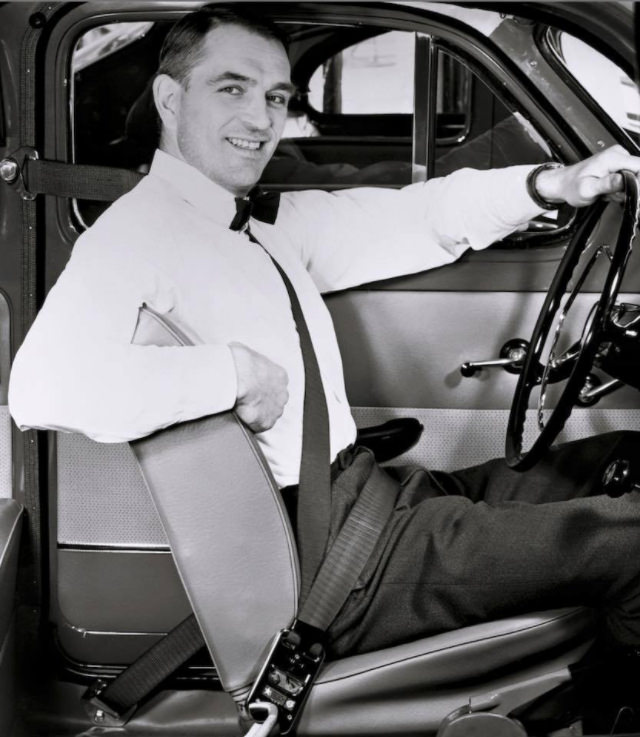
Leaning back in the driver’s seat, a smiling motorist demonstrates a restraint system that looks deceptively simple: a V-shaped three-point safety belt anchored at the shoulder and the hip, meeting at a central buckle. The composition draws your eye along the diagonal strap across the chest and the lap portion secured low over the pelvis, a practical layout that hints at why this design became the standard for modern car safety.
Inside the car’s tidy cabin, the belt’s hardware and mounting points are clearly visible, emphasizing engineering over ornament. Rather than relying on a single strap, the three-point seat belt spreads crash forces across stronger parts of the body, helping reduce the risk of ejection and severe injury—a key reason Volvo’s innovation is widely credited with saving vast numbers of lives.
Few inventions have reshaped everyday travel as quietly as the seat belt, and this historical photo offers a rare, close-up look at that turning point in automotive safety history. For readers searching terms like “Volvo three-point seat belt,” “V-shaped safety belt,” or “inventions that saved lives,” the image reinforces the story: a small change in design that transformed car safety, passenger protection, and public expectations on the road.