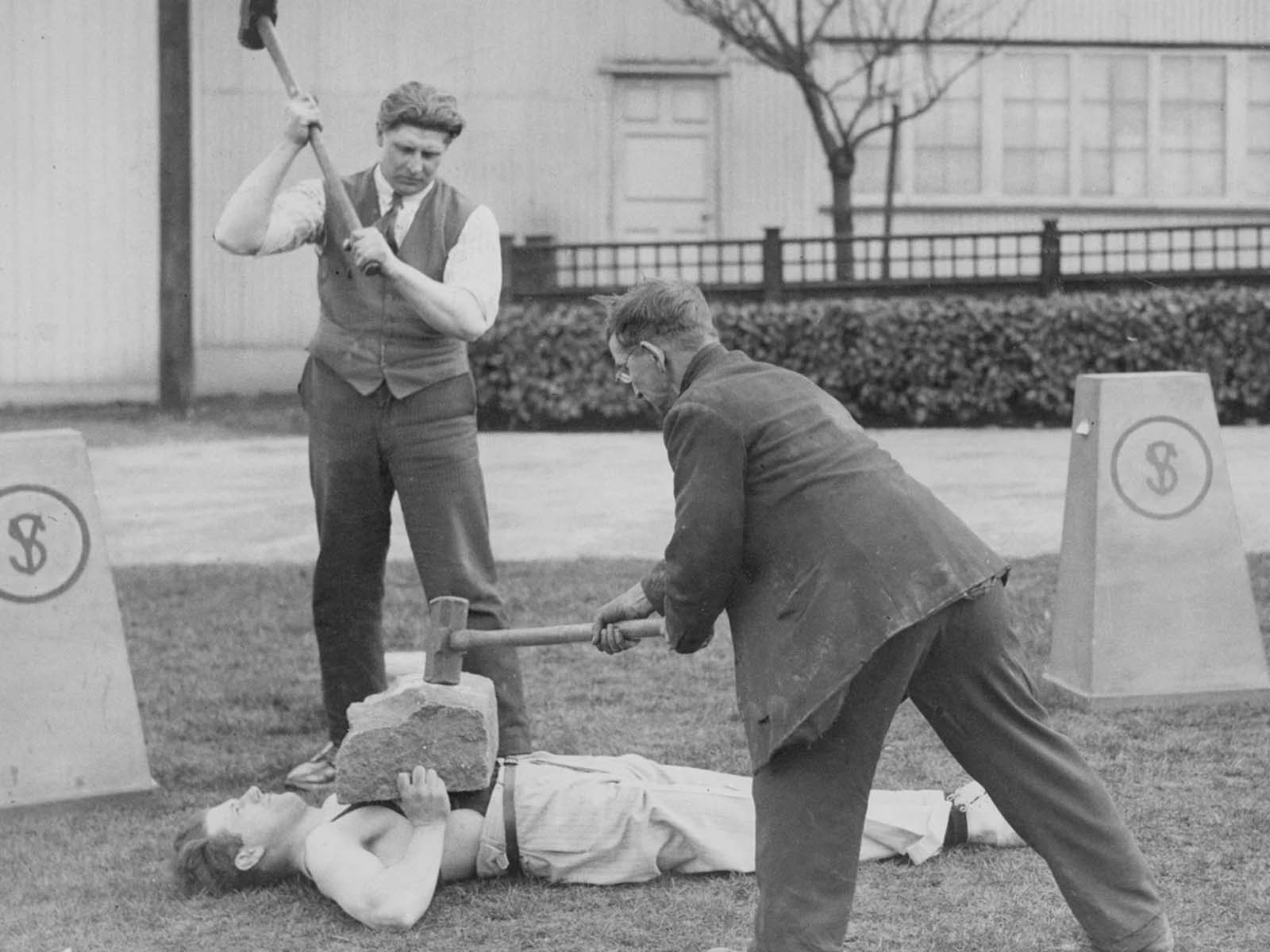
In 1945, the showmanship of strength athletics could be as theatrical as it was dangerous, and this scene leans into that drama without blinking. A strongman lies flat on the grass, bracing a heavy rock on his chest with both hands, his body turned into a living anvil. Nearby, two men prepare their hammers for impact, their poised stances and focused expressions turning the moment into a public test of nerve and endurance.
What makes the photograph so compelling is the contrast between ordinary clothing and extraordinary risk: vests, rolled sleeves, and workmanlike tools arranged around a feat that feels almost unbelievable. The stone’s jagged edges and weighty presence emphasize how much is at stake, while the outdoor setting—open lawn, bare tree, and a simple building in the background—suggests a demonstration staged for an audience rather than a controlled arena. Even the spacing between the men reads like choreography, as if timing and trust are as essential as muscle.
Strongman culture in the early twentieth century often blended sport, spectacle, and promotional bravado, and this image fits squarely within that tradition. It’s a striking window into mid-century ideas of toughness, entertainment, and physical mastery—an era when “feats of strength” could mean putting one’s body on the line in front of onlookers. For readers interested in sports history, vintage strongman acts, and 1940s physical culture, this photo captures the raw appeal of endurance performed as public drama.