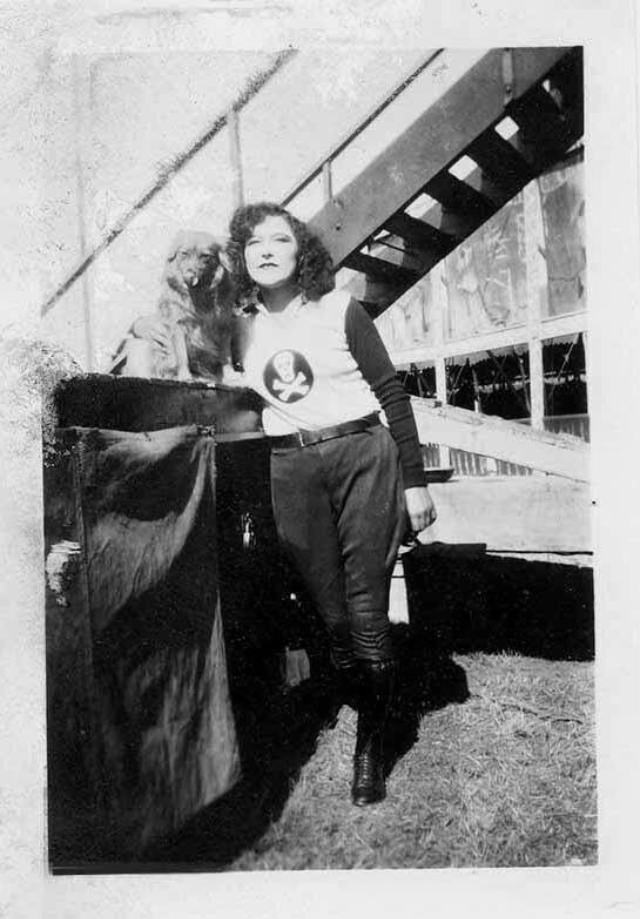
Leaning with easy confidence beside a large animal, Lillian La France looks every bit the showwoman—poised, unsmiling, and dressed for action in tall boots and fitted riding clothes. A bold emblem sits on her chest, hinting at an act built on spectacle and daring, while the angled structure behind her suggests a fairground or performance setup rather than an ordinary street scene. The overall feel is promotional, the kind of publicity image meant to stop passersby and sell them on the thrill to come.
From the title’s claim of “the first female motorcycle stunt rider,” it’s hard not to read this portrait as part of the wider 1930s sports and entertainment world where riders, racers, and stunt performers toured with their acts. The presence of an animal alongside her reinforces that she wasn’t merely posing as a motorcyclist; she was branding herself as a fearless all-around performer, comfortable with risk and with the public gaze. Even without a bike in frame, the stance and wardrobe signal a life spent around speed, crowds, and carefully staged danger.
Fans of women’s sports history and early motorsport will find this photograph a compelling glimpse into how pioneers like Lillian La France were presented—and how they presented themselves—during an era when stunt riding was still carving out its legend. The image works as both a personal statement and an advertisement for a new kind of athletic celebrity: tough, theatrical, and unapologetically visible. For anyone searching for “Lillian La France,” “female motorcycle stunt rider,” or “1930s sports,” this post preserves a striking fragment of that high-risk world.