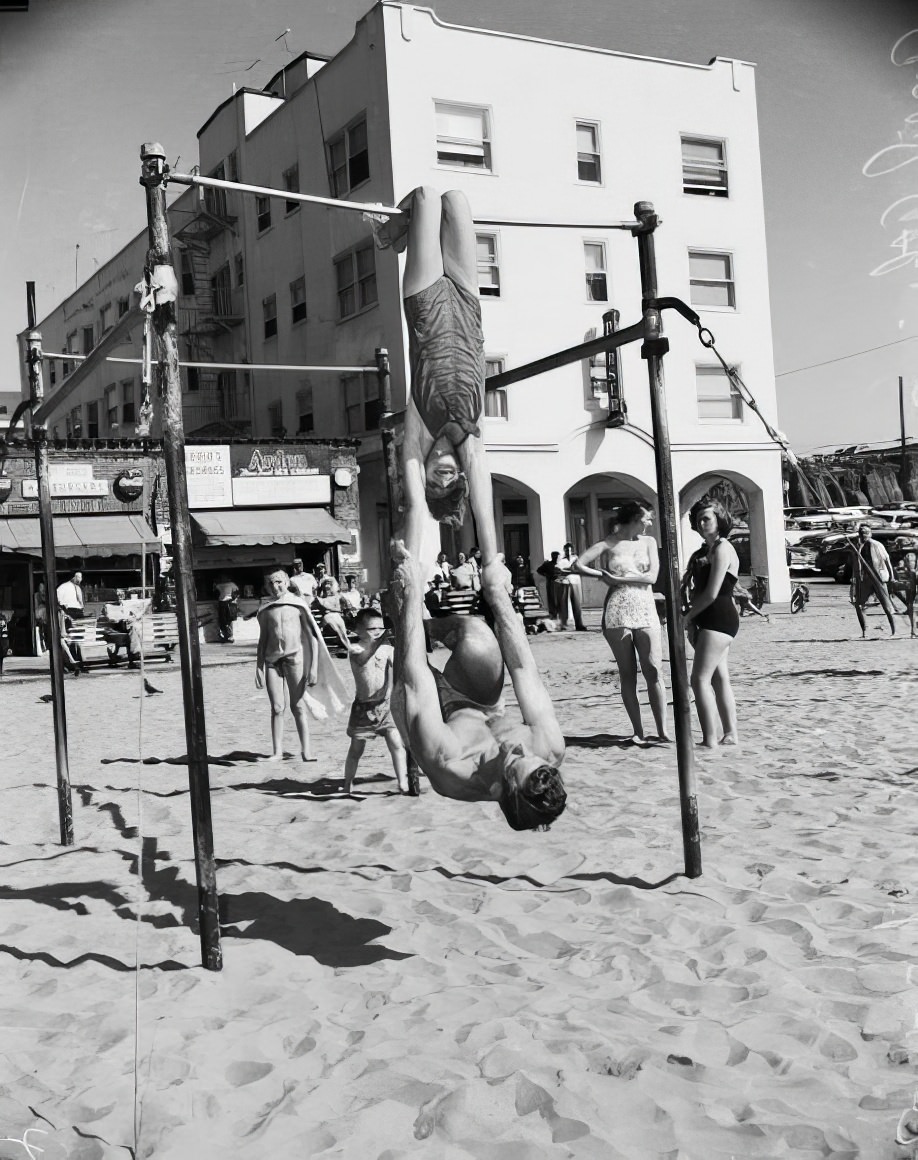
Sunlit sand and a pair of well-worn parallel bars set the stage for an unforgettable display of mid-century beach athleticism. In the foreground, a young performer hangs upside down with remarkable control while an adult man grips her hands, suspended beneath her like a living weight. Around them, beachgoers pause—some in swimsuits, others in casual streetwear—turning a day at the shore into a spontaneous ringside seat for strength and balance.
According to the title, the star is April Atkins, a 12-year-old “strong girl” associated with Muscle Beach and famed for being able to carry five people, a claim that speaks to the era’s love of bold feats and public demonstrations. The photograph’s candid onlookers and simple equipment suggest a culture where fitness was both recreation and spectacle, blending gymnastics, acrobatics, and showmanship into a kind of outdoor theater. Even without staged lighting or a formal arena, the moment feels carefully held—part athletic technique, part crowd-pleasing bravura.
Behind the action, the backdrop of beachfront buildings, storefront signage, and parked cars grounds the scene in everyday life, reminding us how public spaces once doubled as training grounds and performance venues. For readers drawn to 1950s sports history, women’s strength, and the legendary atmosphere of Muscle Beach, this image offers a vivid glimpse of how physical culture entered the mainstream—one daring hold at a time. It’s a snapshot of confidence and curiosity, where a child’s astonishing ability becomes the day’s headline and everyone nearby becomes a witness.