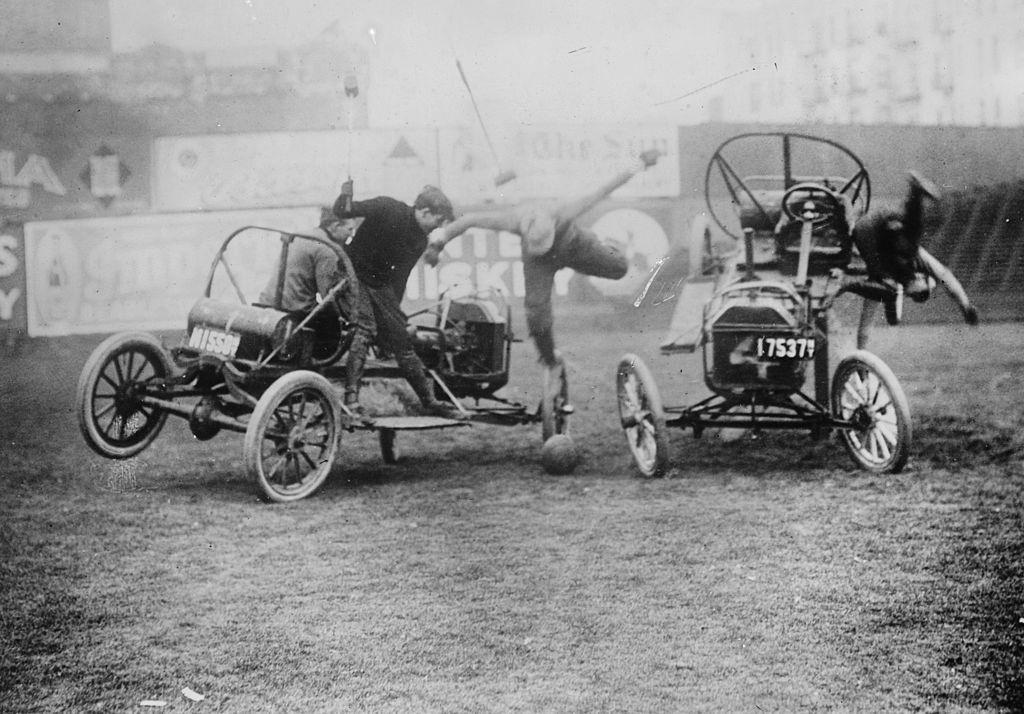
Roaring engines replace thundering hooves as automobile polo bursts to life inside an arena on Coney Island, New York, in the 1900s. Two open-framed cars skid across the grass toward a small ball, their thin spoked wheels and exposed mechanics underlining just how early this motoring era really was. The drivers lean hard into the chase while a teammate braces to swing a mallet, turning a genteel pastime into a full-speed spectacle.
At the center of the action, one competitor is flung outward in midair, a frozen moment that hints at why this short-lived sport became infamous. With minimal bodywork, no modern safety restraints, and vehicles close enough to clip wheels, the game demanded nerve as much as skill. The blurred background signage and crowded arena atmosphere suggest a show designed for thrills, where risk was part of the ticket.
Coney Island’s amusement culture made it a natural stage for such mechanical daredevilry, blending new technology with old sporting traditions for a paying public eager to see the future race by. For historians of early automobiles and American sports, the photograph offers a vivid look at how innovation reshaped entertainment—sometimes recklessly—during the dawn of mass motoring. It’s a reminder that the 1900s weren’t only about progress on the road, but also about how quickly that progress became a public performance.