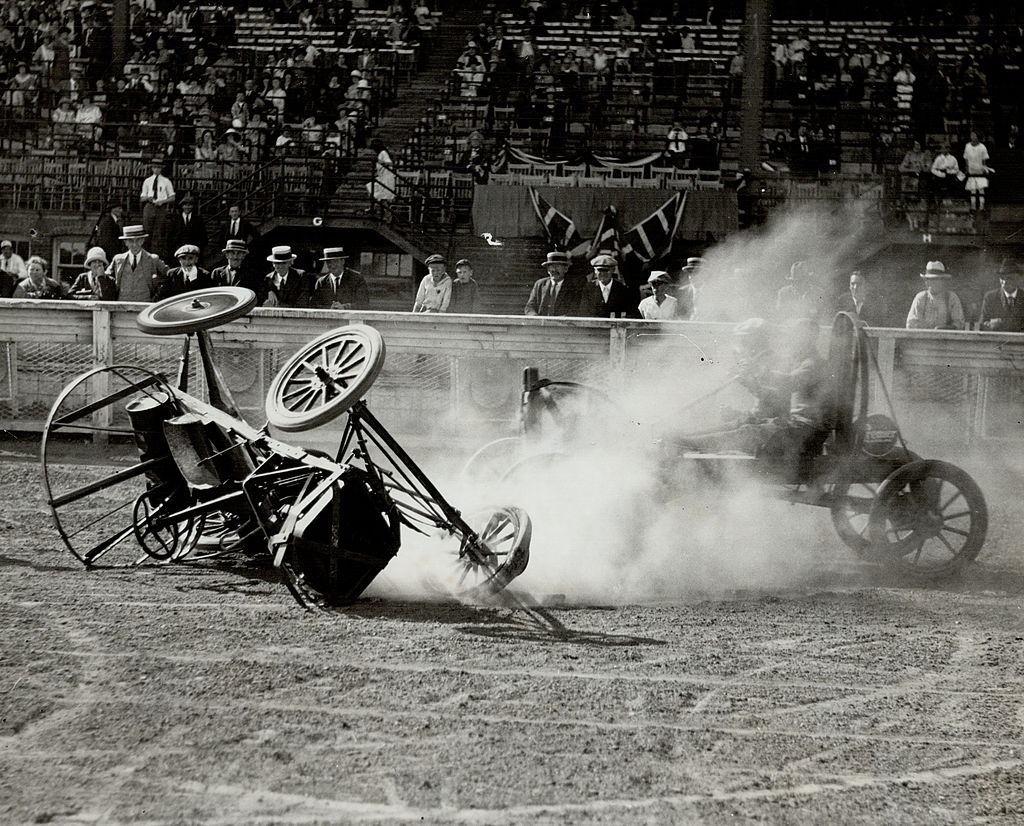
Dust and smoke hang over the arena as a lightweight car lies upside down, its spoked wheels jutting into the air like a toppled insect. Behind the wooden barrier, spectators in hats and suits lean forward from the grandstand, watching the aftermath with the tense curiosity that early motor sports seemed to invite. Another vehicle sits nearby in the haze, suggesting how quickly a fast-moving play could turn into a hard collision on the rough field.
Auto polo—an early 20th-century twist on traditional polo—replaced horses with automobiles and trading reins for steering wheels didn’t make the contest any gentler. Drivers and their teammates, sometimes perched precariously on the running boards, chased a ball at speed, swinging mallets while bouncing over uneven ground. The photograph’s frozen moment of impact captures why the sport earned a reputation for spectacular wrecks and why a single crash could become the day’s unforgettable headline.
Set in 1922, the scene offers a vivid window into an era fascinated by new machines and daring entertainment, when mechanical power promised modern thrills at close range. The crowd’s proximity to the action, the improvised-looking barriers, and the dramatic plume of dust all speak to a time before today’s safety standards reshaped competitive driving. For historians of sports and automotive culture, this crashed car in an auto polo match stands as a reminder that innovation often arrived with equal parts excitement and risk.