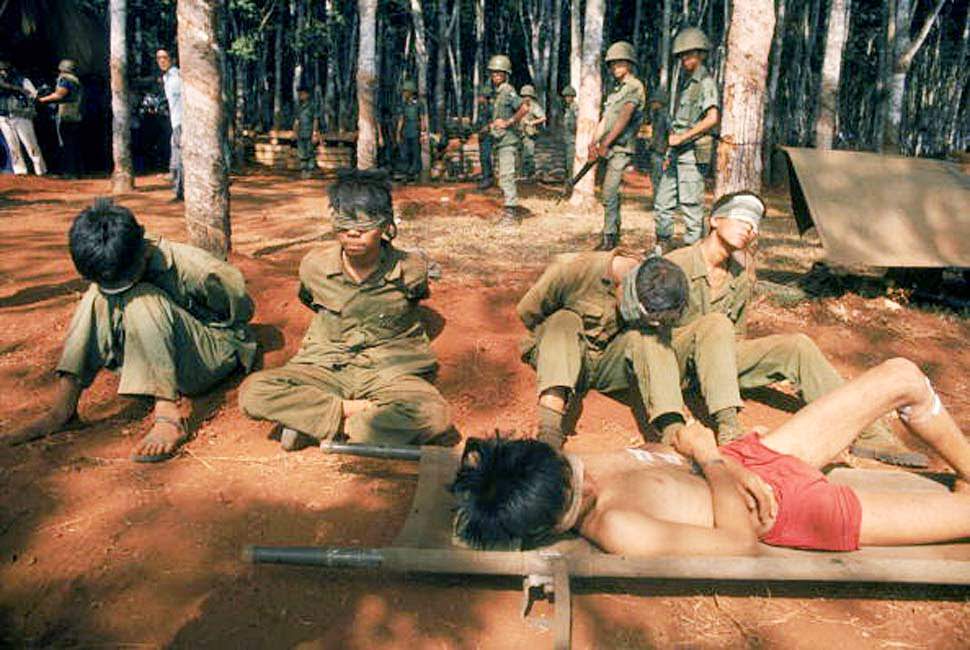
Bare red earth and tall trees frame a tense scene from the final weeks of the Vietnam War, as blindfolded North Vietnamese troops sit and lie on the ground with their hands restrained. In the foreground, one prisoner is stretched on a simple cot while others slump nearby, their posture suggesting exhaustion and uncertainty. The title places the moment in Saigon in April 1975, when the conflict’s endgame was unfolding with startling speed.
Across the background, armed guards in helmets stand watch, rifles held at the ready, creating a stark contrast between those upright and those immobilized. The spacing between figures, the makeshift nature of the holding area, and the subdued body language all underline how quickly ordinary terrain can become a temporary detention site in wartime. Even without visible insignia or readable signage, the uniforms and gear situate the photograph firmly within late-war military realities.
For readers searching Vietnam War history, Saigon 1975, or the collapse of South Vietnam, this image offers a raw glimpse into captivity, control, and vulnerability at a decisive turning point. It also reminds us that the war’s closing chapter was not only written in headlines and negotiations, but in improvised camps and guarded clearings where individual fates hung in the balance. The photograph’s power lies in its quiet detail: blindfolds, dust, and the uneasy stillness of a moment that could not last.