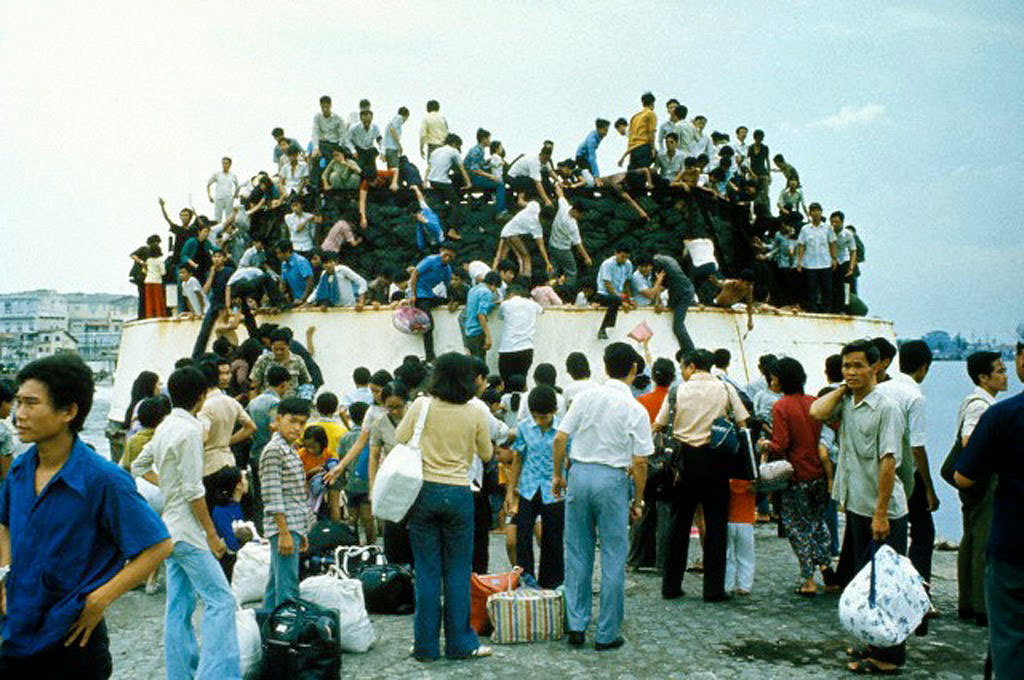
Crowds surge along the waterfront of Saigon as people scramble up the side of a barge, stacking themselves atop a dark mound of cargo and clinging to any handhold they can find. On the quay below, families and individuals cluster around bundles and suitcases, faces turned toward the vessel as if watching a last door swing shut. The scene is chaotic but purposeful, a split-second portrait of movement driven by fear, hope, and the press of time.
The title places this moment on the day of the Fall of Saigon, when advancing North Vietnamese troops signaled the collapse of South Vietnam and the end of the Vietnam War. Rather than a battlefield, the port becomes the stage—an ordinary commercial space transformed into an escape route where ships and barges offered a fragile possibility of safety. The density of bodies, the improvised climbing, and the scattered belongings speak to evacuation as lived experience: hurried decisions, uncertain destinations, and the wrenching act of leaving.
For readers searching the history of Saigon 1975 and the final hours of the Vietnam War, this photograph underscores how geopolitical events compress into the tight frame of a single shoreline. It captures the human scale of a turning point—people negotiating space, weight, and access as if survival depends on inches. Seen today, the image invites reflection on displacement and the enduring memory of the Fall of Saigon, when escape by water became a lifeline for many.