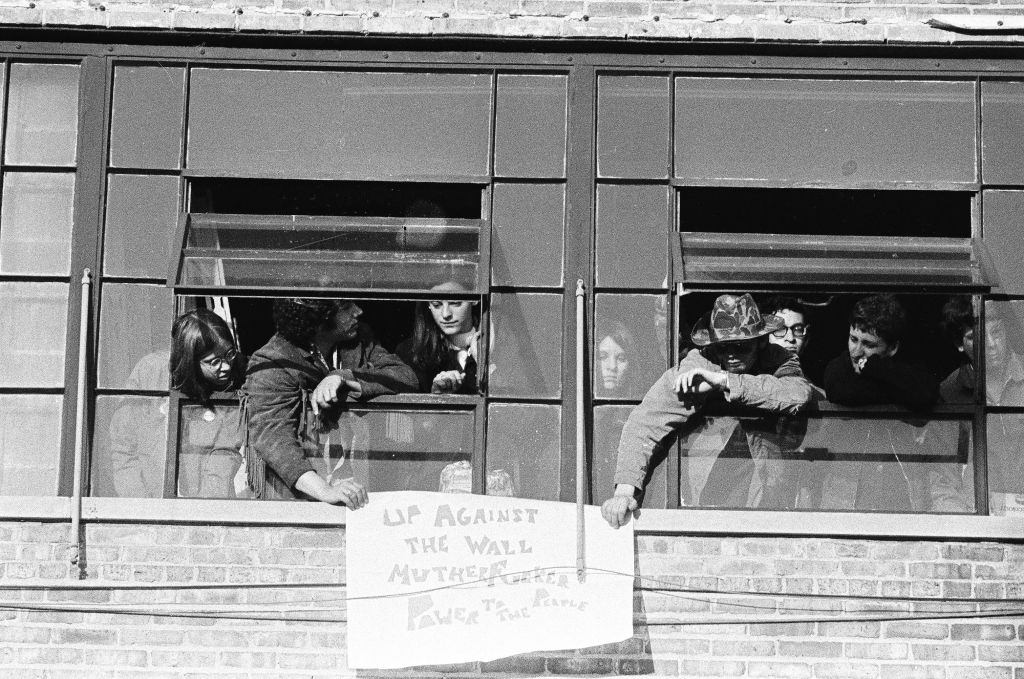
Leaning out from a long row of campus windows, a cluster of UIC Circle students looks down and outward, their faces half-lit by daylight and framed by steel and brick. Arms rest on the sills in a posture that reads as both watchful and weary, as if the building itself has become a barricade and a bulletin board at once. A hand-lettered protest sign hangs below them, its uneven lettering underscoring the urgency of a moment that didn’t wait for polished slogans.
Set in the tense aftermath of the Kent State shootings, the scene reflects how quickly national tragedy reverberated through university life during the Vietnam War era. The students’ quiet density—some peering from behind others, one in a brimmed hat, another with glasses pressed close to the glass—suggests a shared attention trained on events beyond the frame, where a strike and demonstration would be unfolding. Even without a clear view of the crowd below, the photograph conveys a campus in motion, turning classrooms and corridors into spaces of dissent.
For readers searching the history of student protest at UIC Circle in May 1970, this image offers a grounded glimpse of how activism occupied everyday architecture. Windows become vantage points, the sign becomes a public statement, and the ordinary act of looking out becomes a form of participation. It’s a reminder that the Vietnam War protests were built not only from marches and megaphones, but also from moments like this—collective, immediate, and intensely human.