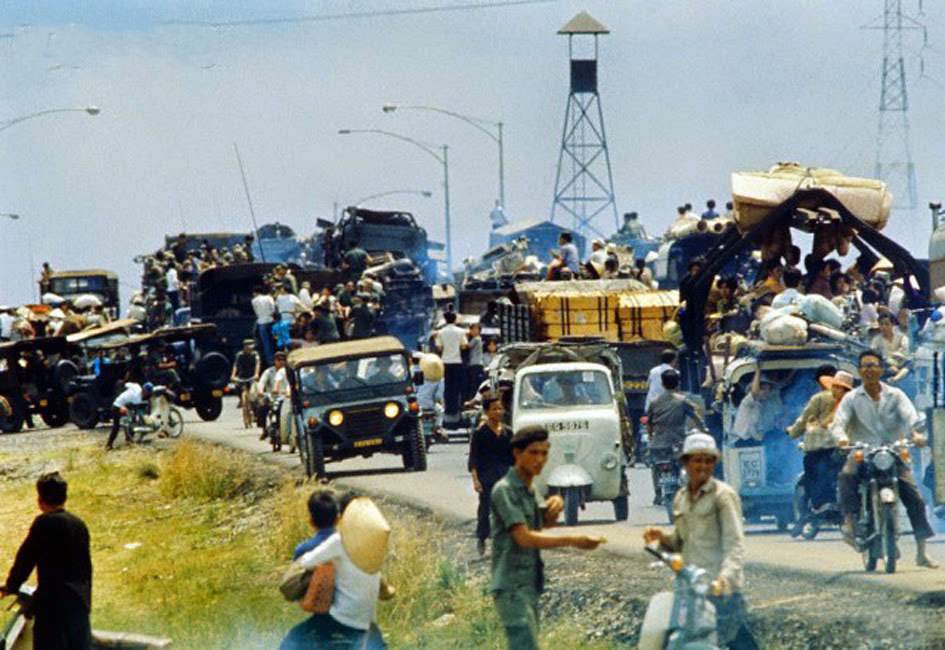
Highway 1 becomes a moving bottleneck of fear and improvisation, packed with trucks, jeeps, motorbikes, and pedestrians pressed into the same narrow ribbon of road. People cling to the sides of vehicles or perch atop overloaded cargo, their belongings bundled in sacks and boxes as the convoy inches forward. In the distance, more vehicles crowd the horizon, turning an ordinary highway into a corridor of flight during the Vietnam War.
What stands out is the sheer density of bodies and baggage: families squeezed into open beds, riders gripping handlebars while weaving through stalled traffic, and figures on foot keeping pace at the road’s edge. The scene suggests not an organized relocation but a sudden exodus, where any available transport becomes a lifeline. Even without hearing it, you can almost imagine the noise of engines, shouted instructions, and the constant urgency of movement.
As a historical photo, it documents South Vietnamese refugees in a moment when survival depended on speed, access, and the fragile protection of a passing vehicle. The watchtower-like structure and the endless stream of traffic emphasize how public infrastructure can transform under wartime pressure, serving as both escape route and chokepoint. For readers searching Vietnam War history, refugee crisis images, or accounts of Highway 1, this photograph offers a stark, human-scale view of displacement on the road.