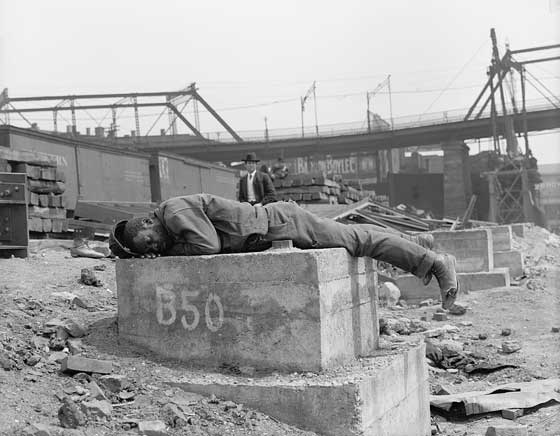
A man lies stretched across a rough concrete block, using one arm as a pillow and letting his boots hang off the edge as if the slab were a proper bed. The scene is littered with rubble and scattered materials, and the stark texture of the “concrete-hard mattress” makes the title land with a dark, immediate humor. Painted numbers on the block turn the improvised resting place into something like inventory, reminding you that even sleep can happen on whatever surface work and poverty leave behind.
Behind him, an industrial landscape rises with beams, cables, and a raised structure that suggests a busy work site or rail-side yard, the sort of place built for movement and production rather than comfort. A second figure stands in the background, distant and watchful, adding a quiet sense of public exposure—rest taken in the open, where anyone might pass by. The contrast between a human body at rest and the hard geometry of infrastructure gives the photograph its tension: tenderness and exhaustion in a world of stone and steel.
For readers searching for 1890s working-class life, urban labor history, or the everyday realities hidden between the headlines, this image speaks in a blunt visual language. It’s funny at first glance, yes, but the joke carries weight: the line between workplace and sleeping place collapses when conditions demand it. In a few spare details—dusty ground, makeshift bedding, industrial clutter—the photo preserves a moment that feels both specific to its era and painfully familiar today.