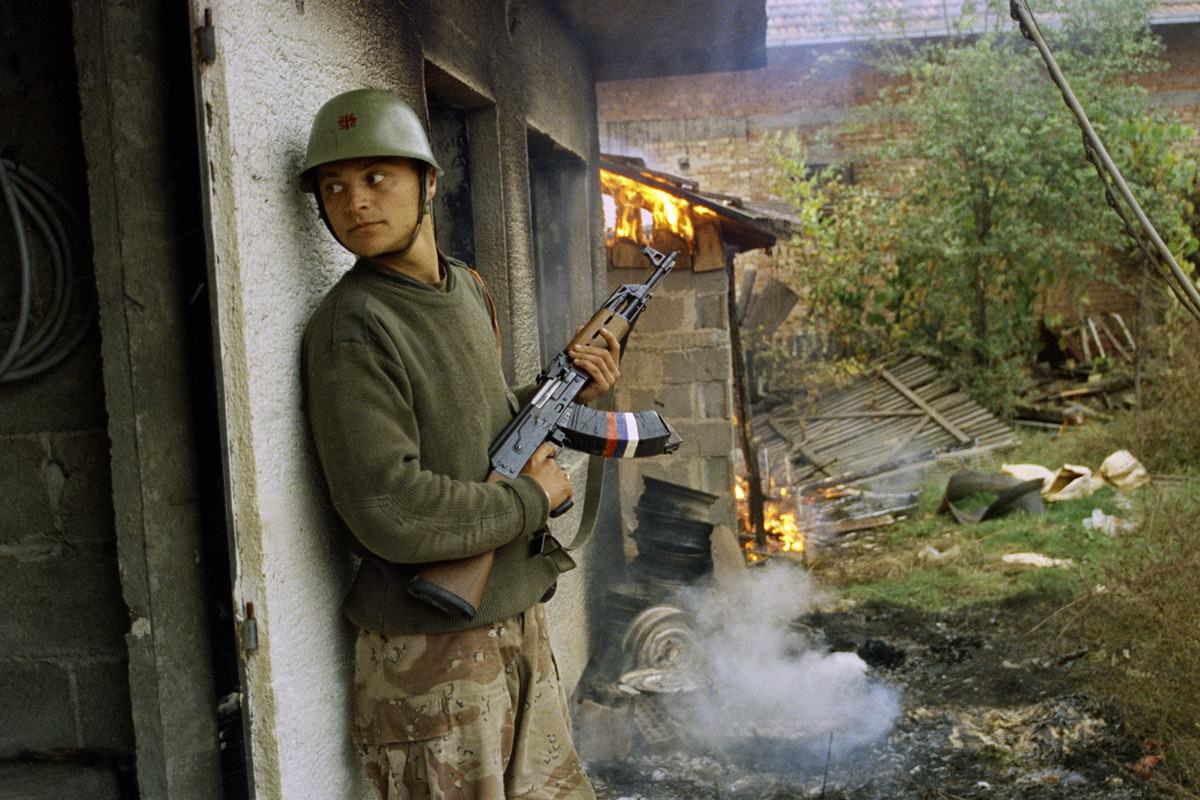
Pressed against the rough corner of a village building, a Serbian soldier keeps his rifle close while glancing into the open space ahead, using the wall as the thinnest possible shield. His helmet and field-worn clothing blend into the gray plaster and soot, a visual reminder of how quickly ordinary streets can become improvised battle positions. The tension in his posture suggests listening as much as looking—waiting for movement, a shout, or the crack of gunfire.
Behind him, a house burns in Gorica, Bosnia-Herzegovina, its flames licking through damaged roofing and broken timbers as smoke drifts low across the ground. Scattered debris, blackened barrels, and charred earth frame the scene, turning a rural yard into a landscape of sudden loss. Even in color, the photograph feels muted by ash and haze, emphasizing the fragility of homes and the speed with which fire erases the familiar.
Dated October 12, 1992, the image speaks to the wider violence of the Bosnian War and the civil wars that tore through the former Yugoslavia, where villages like Gorica were caught between armed forces and shifting front lines. Rather than offering spectacle, it lingers on the unsettling proximity of combat to everyday life—doorways, gardens, sheds, and rooftops repurposed by necessity. For readers searching the history of Bosnia-Herzegovina in 1992, wartime photography, or the realities of soldiers and civilians in civil conflict, this moment distills a larger tragedy into a single, stark frame.