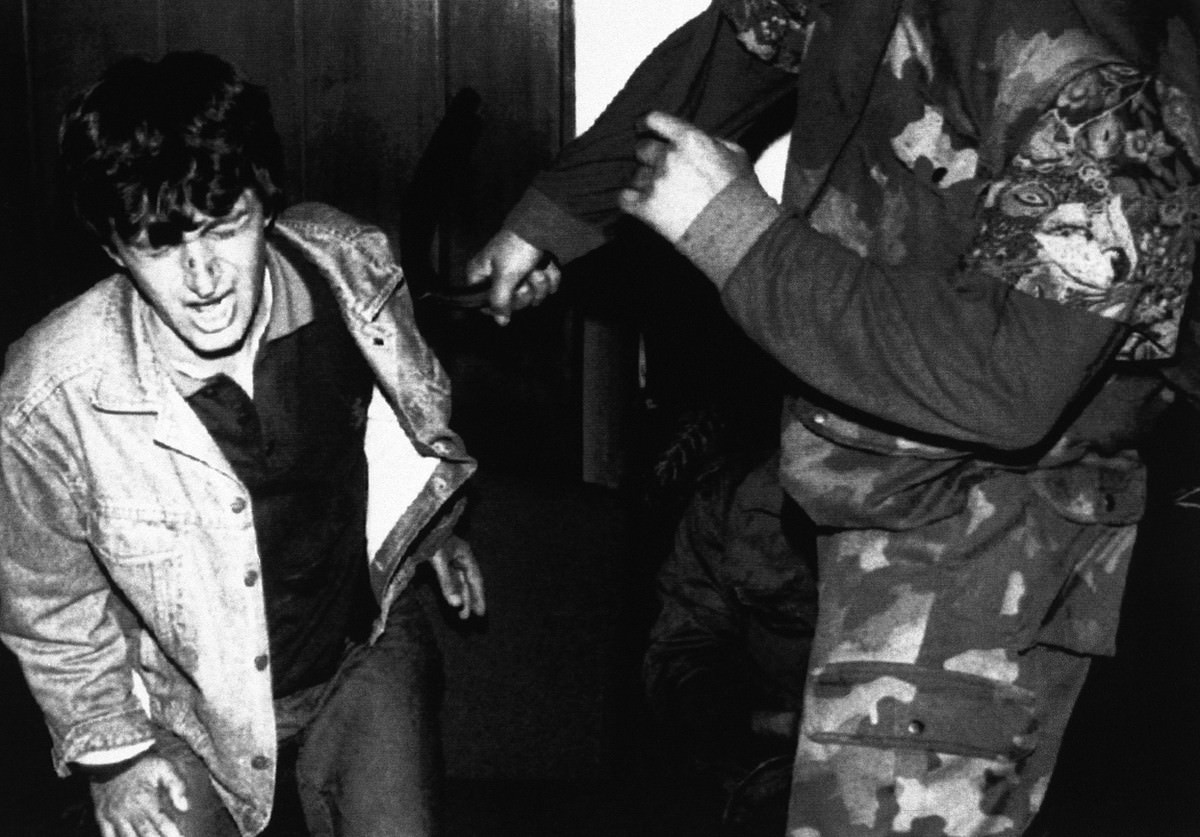
Harsh lighting and a cramped interior frame a moment of coercion in Višegrad during the Bosnian war, where a captured man recoils as a Serbian soldier looms close in camouflage. The scene is intimate in the most unsettling way—there is no battlefield vista, only bodies pressed into a narrow space, a clenched arm, and a face caught mid-grimace. As a piece of conflict photography, it pulls the viewer from headlines into the direct, uneven power of an interrogation turned violent.
Taken on June 8, 1992, the photograph speaks to how civil wars often unfold away from front lines, in back rooms and improvised detention sites where control is asserted through fear. The title’s reference to a “captured Muslim militiaman” and a Serbian soldier situates the image within the ethnic and political fractures that tore through Bosnia and Herzegovina in the early 1990s. Even without wider context in the frame, the clothing, posture, and closeness communicate captivity, intimidation, and the vulnerability of those swept into the machinery of war.
For readers searching the history of Višegrad, Bosnia 1992, and the Bosnian conflict’s human toll, this single photograph offers a stark entry point into the era’s abuses and the blurred boundary between interrogation and punishment. It also raises enduring questions about documentation: what it means to witness, how violence is recorded, and why such records matter long after the moment has passed. In a WordPress archive of civil wars, images like this remain difficult to view—yet essential for understanding how quickly ordinary spaces can become theaters of brutality.