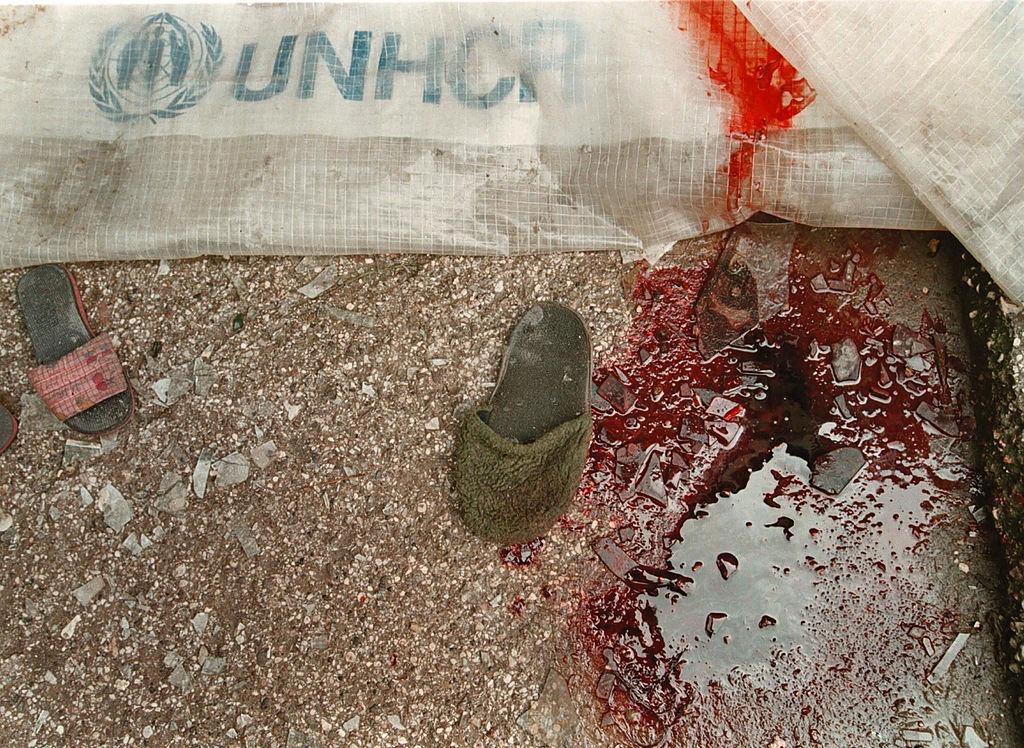
Stenciled with the UNHCR emblem, a plastic sheet meant for shelter and basic protection lies crumpled at the edge of a gritty roadway, its surface streaked and soaked with blood. The frame holds only fragments of presence—scattered shards, a puddled stain, and a lone slipper—details that speak louder than any crowd. Aid material, designed for survival in displacement, becomes in an instant a witness to violence.
Dated in the title to Monday, June 26, 1995, the photograph sits squarely within the era of civil wars that reshaped communities and overwhelmed humanitarian systems. The sharp contrast between relief branding and fresh injury underlines the tragic closeness of everyday life to sudden catastrophe in conflict zones. What should signify refuge instead marks the immediate aftermath of harm, turning an object of assistance into a record of suffering.
For readers searching the history of UNHCR operations, refugee crises, and wartime humanitarian response, this image offers a stark, ground-level perspective without relying on spectacle. Its power rests in what is absent: the people are off-camera, yet their vulnerability is unmistakable in the abandoned footwear and the blood pooling beside the sheet. As a historical document, it reminds us that behind the language of “civil wars” are ordinary belongings, improvised shelters, and lives interrupted.