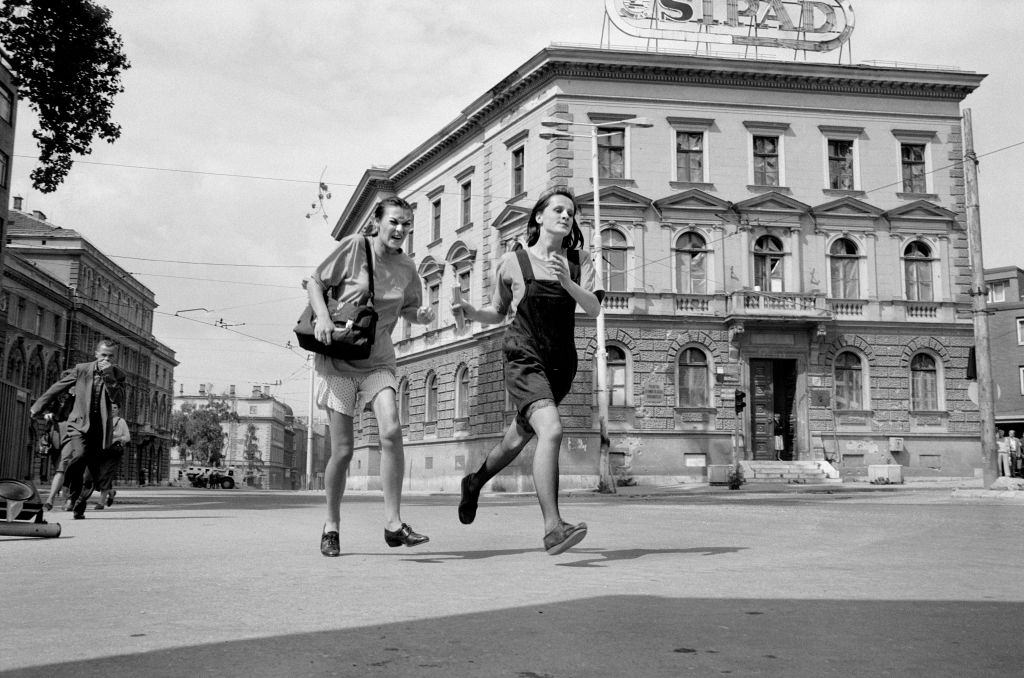
Fear is written across two teenage faces as they bolt through an exposed intersection on the route long nicknamed “Sniper Alley,” the kind of place where a few open metres could feel like a battlefield. One girl clutches her bag while her stride breaks into a frantic leap; the other drives forward with her arms tense, eyes fixed ahead, intent on reaching cover. Behind them, a lone figure runs in the same direction, and the empty width of the street amplifies the sense of danger more than any visible weapon could.
The setting is an ordinary city crossroads made extraordinary by war: tram wires crisscross the sky, façades loom with shuttered windows, and a large rooftop sign crowns a solid corner building that might once have signaled commerce and routine. In July 1992, everyday architecture like this became part of the story of civil conflict, turning sidewalks, doorways, and intersections into calculated choices. The photo’s stark contrast between calm stonework and panicked motion captures how quickly normal life can be forced into survival.
Images like this endure because they translate headlines into human scale, showing what “crossing the street” meant when snipers and shelling reshaped urban space. The teenagers at the center are not presented as symbols so much as as people caught in a single, decisive moment—mid-step, mid-breath, mid-fear. For readers searching for historical photographs of Sniper Alley, the Bosnian War era, and civilian life under siege, this frame offers a vivid, unsettling reminder of how civil wars mark the young and redefine the simplest journeys.