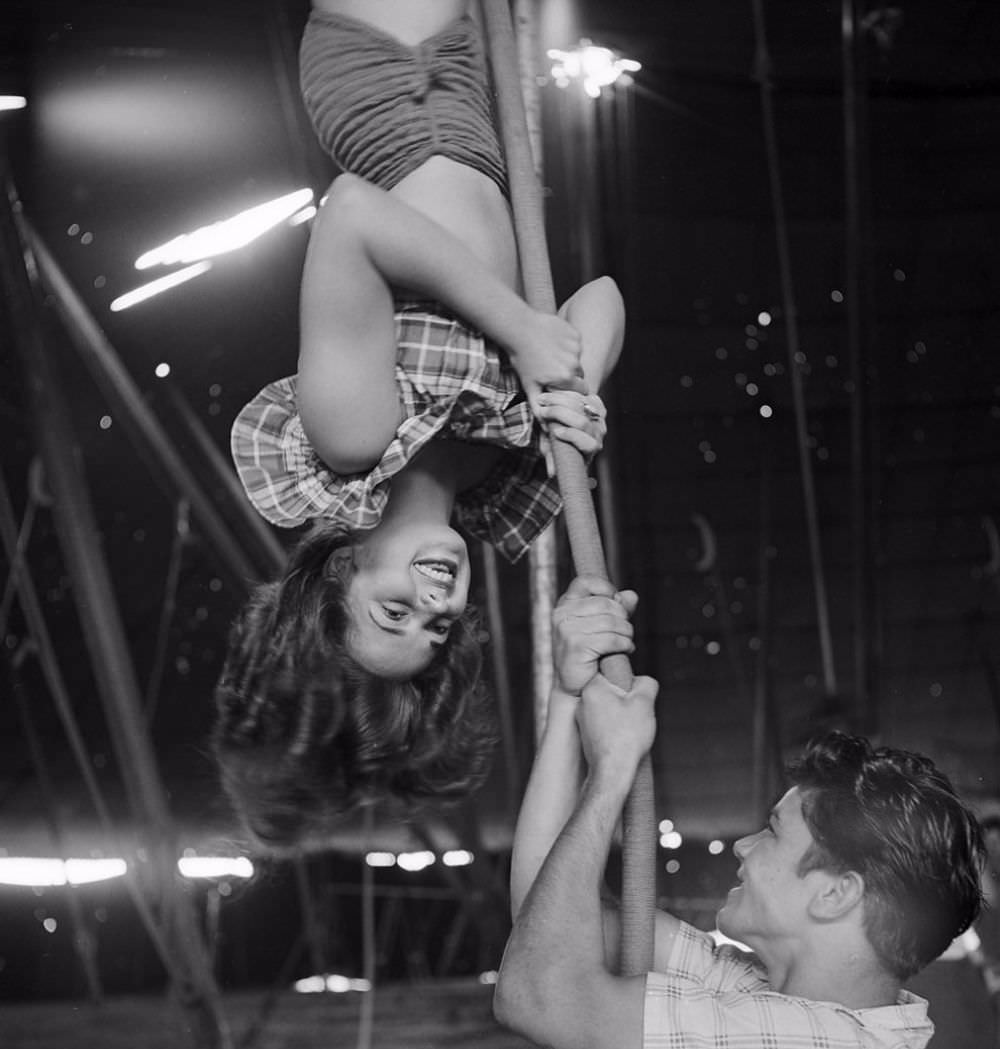
Suspended upside down, a young acrobat grips a rope with practiced ease, her hair falling toward the arena floor as she flashes a quick smile mid-rehearsal. The background dissolves into the dim geometry of rigging and scattered points of light, hinting at the cavernous interior where circus magic was built long before the audience arrived. It’s a candid glimpse of Ringling Bros. and Barnum & Bailey training culture in Sarasota in 1949, when the spectacle depended on relentless repetition and fearless body control.
Below her, an unidentified man steadies the line, eyes trained upward, hands positioned to guide and safeguard the movement. His presence underscores how aerial acts were rarely solo feats: behind every graceful drop or held pose stood the quiet labor of trainers, riggers, and spotters who managed tension, timing, and risk. The contrast between her dynamic inversion and his grounded focus captures the teamwork that kept performers flying.
Sarasota’s long association with the American circus comes into sharper focus through moments like this, where rehearsal replaces pageantry and the workday replaces the parade. The performer’s costume and the utilitarian rope evoke a world in which athleticism, showmanship, and routine training blended into a distinctive mid-century circus lifestyle. For readers drawn to circus history, vintage Sarasota photography, or the Ringling Bros. legacy, this image offers a vivid, human-scale window into how big-top brilliance was practiced into being.