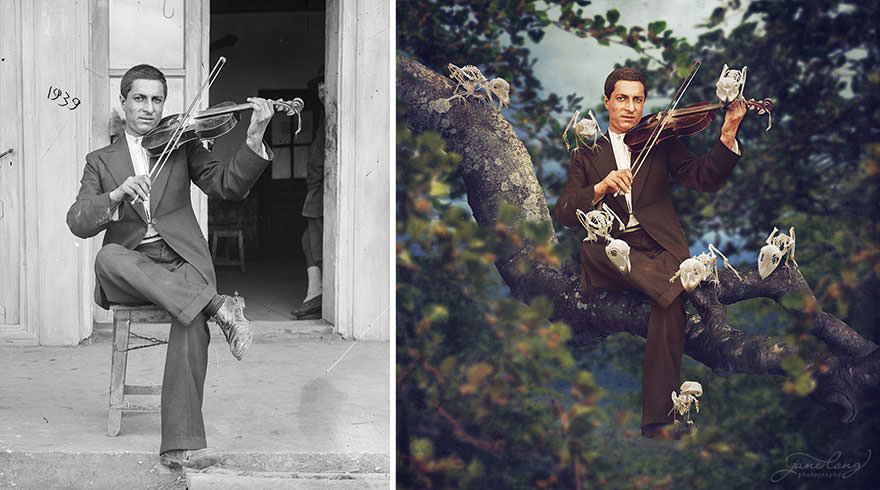
A violinist sits poised with one leg crossed, bow lifted mid-phrase, his tailored suit and polished shoes lending the scene a quiet formality. In the original glass-plate photograph, the setting feels straightforward—a doorway, a simple chair, a glimpse of interior shadow—yet the musician’s direct gaze and controlled posture give it the intensity of performance rather than mere portraiture. Small details, from the crisp white shirtfront to the angles of the instrument, anchor the moment in a world where music and personal presentation traveled together.
Colori’s recoloring reimagines that same figure with conceptual flair, lifting him out of the plain threshold and into a dreamlike canopy of leaves. The deep greens and softened background blur create the sensation of air and distance, while pale blossoms (or petal-like shapes) float around the musician as if the notes themselves had become visible. It’s less about “restoring” a lost reality than building a new one—an artistic colorization that treats history as raw material for mood, symbolism, and storytelling.
For readers drawn to historic photo colorization, the pairing invites a fascinating comparison: documentary restraint beside imaginative transformation. The glass-plate source preserves texture, contrast, and the unembellished honesty of early photography, while the recolored version uses palette and setting to guide emotion and interpretation. Together they highlight why recoloring remains so compelling for modern audiences—bringing vintage photography closer, not only through believable tones, but through creative choices that make the past feel newly alive.