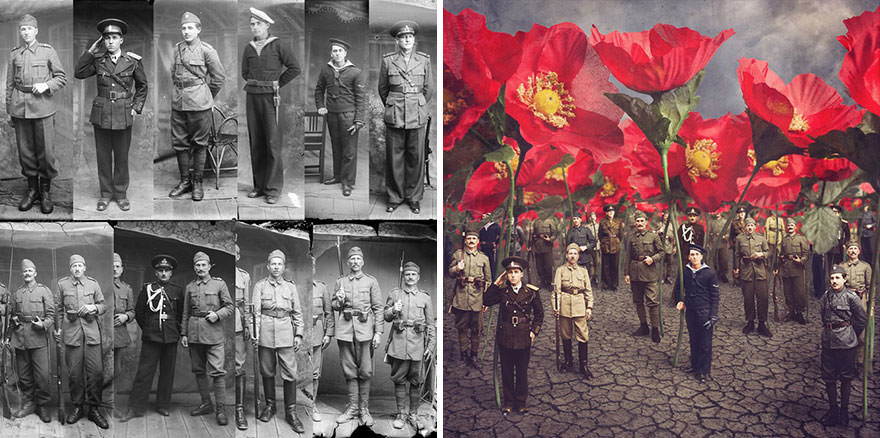
Arranged like a contact sheet, the left side strings together stern, full-length portraits of uniformed men, each framed by the plain backdrops and studio props typical of glass-plate photography. Caps, belts, tall boots, and neatly buttoned tunics become the true subjects, rendered in crisp grayscale detail that highlights fabric texture and the formal posture demanded by the camera. These individual studies feel documentary and intimate at once, preserving the small differences in stance and expression that survive even the strict visual language of military portraiture.
Across the split composition, recolorization shifts the mood into something more conceptual: oversized red poppies tower above a marching formation, their petals blazing against a muted sky. The effect reads like a visual metaphor layered onto the archival scene—remembrance, sacrifice, and the intrusion of symbolism into lived history—while still honoring the original photographic structure beneath. Color here isn’t merely decorative; it becomes narrative, guiding the eye and emotions as surely as a caption might.
What makes this post compelling for readers interested in historic photo colorization and restored glass-plate images is the dialogue it sets up between record and reimagining. The monochrome portraits insist on accuracy and the authority of the lens, while the color treatment invites interpretation, using artful palette choices and surreal scale to suggest meaning beyond the literal. Together, they demonstrate how contemporary recoloring can revive archival photographs for modern audiences—without pretending the past was ever as simple as a single shade.