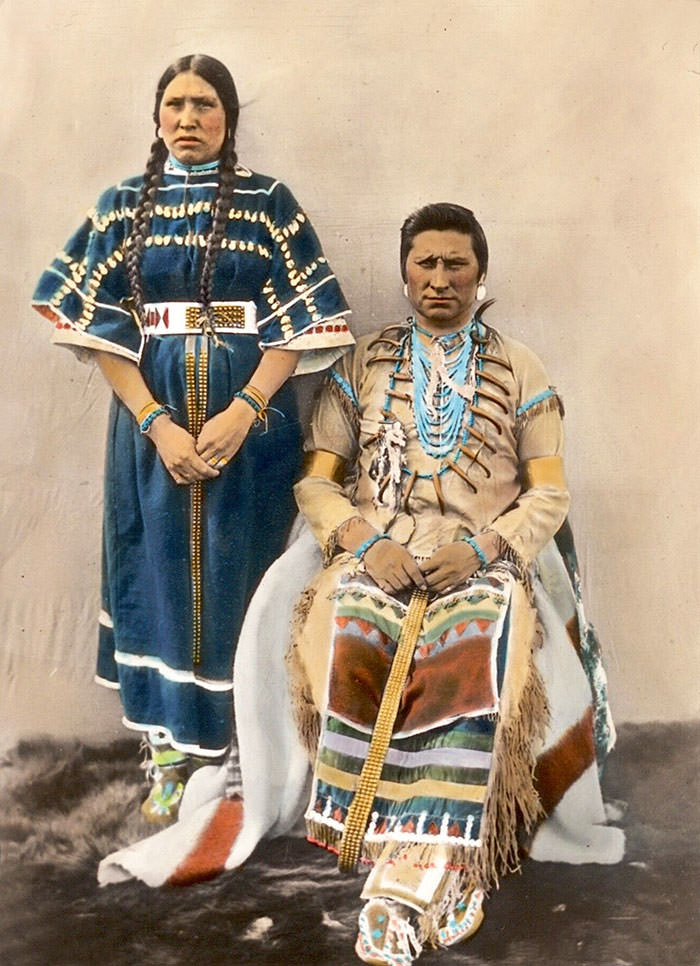
Poised against a simple studio backdrop, a Blackfoot couple faces the camera with a steady, unsentimental presence that feels both intimate and formal. The woman stands with long braids and a richly patterned blue dress, while the man sits beside her in finely worked clothing that includes beadwork, fringed elements, and layered adornment. The careful posture and direct gaze suggest a portrait meant to endure, not a fleeting snapshot.
Colorization brings forward details that lantern slides often hold in quiet reserve: turquoise tones in the necklaces, the crisp contrast of white and blue on the dress, and the vivid striping and geometric motifs across the seated figure’s garment. Textiles, beadwork, and accessories become legible as skilled craft rather than mere “costume,” inviting a closer look at materials and design choices. Even the neutral background helps the eye linger on each stitched line and shimmering strand.
Credited to Walter McClintock and placed in Montana in the early 1900s, the image sits at the crossroads of ethnographic collecting and personal representation, where Indigenous subjects were often photographed through outside expectations yet still asserted their own dignity. For readers searching for Blackfoot history, Montana Native American photography, or early 20th-century glass lantern slides, this portrait offers a powerful visual record. It also serves as a reminder to view such photographs with context—recognizing both what the camera preserved and what it could never fully explain.