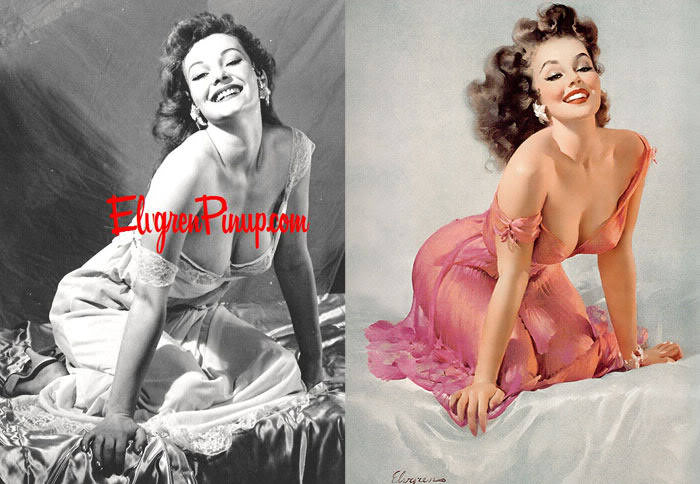
Side by side, a candid studio reference and a finished pin-up painting reveal how “incredibly beautiful” artwork was built from real bodies, real posture, and real light. On the left, the model leans forward on rumpled fabric, smiling with an easy, unguarded warmth; on the right, that same pose becomes a polished fantasy in luminous color, with softened skin tones, carefully amplified curves, and a more theatrical sense of glamour. The pairing makes the creative process instantly readable, turning a familiar pin-up look into a lesson in translation from photograph to illustration.
What stands out is not just the makeover, but the continuity: the expression, the tilt of the shoulders, and the playful confidence survive every brushstroke and edit. Details shift in service of the era’s ideal—hair grows fuller and more sculpted, highlights and shadows become more deliberate, and the drapery transforms into a silky stage that flatters the composition. The result is a reminder that classic pin-up art wasn’t simply “pretty pictures,” but a collaboration between model, photographer, and artist, each shaping the final icon.
For readers curious about pin-up models before and after editing, this comparison offers a clear window into mid-century visual culture and the marketing of glamour. It also invites a more humane perspective on the women behind the paintings: not anonymous muses, but working models whose presence anchored the fantasy in something tangible. If you love vintage illustration, retro beauty, and the behind-the-scenes story of how pin-up artwork was made, this post is a satisfying deep dive into the craft and the mythmaking.