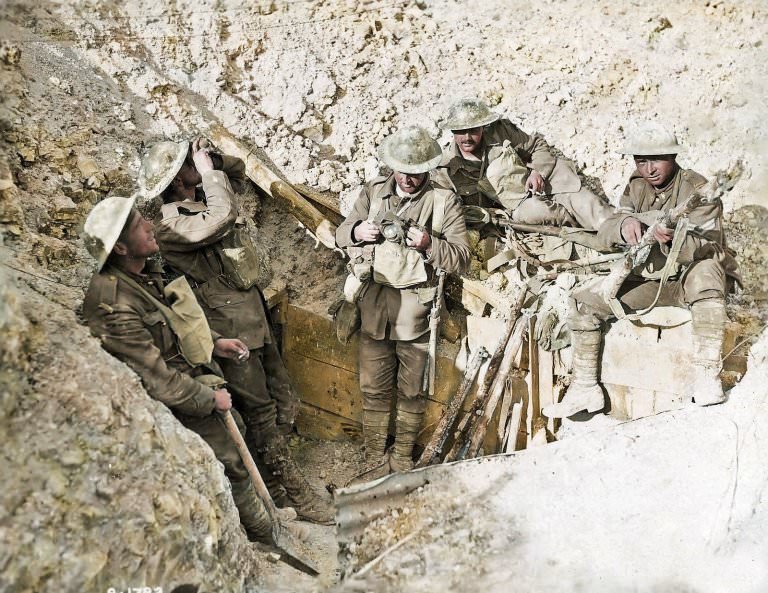
Mud walls rise close around a captured trench in France, hemming in a small group of Canadian soldiers as they steal a brief pause from the fighting. Their steel helmets and heavy kit crowd the narrow space, while rough timber revetments and a leaning sheet of corrugated metal hint at how quickly these positions were dug, fought over, and reused. In this colorized view, the earth’s pale tones and scuffed uniforms make the trench feel starkly exposed despite its purpose as shelter.
In the middle, one man concentrates on his rifle, hands busy with the routine care that kept a weapon reliable when everything else was uncertain. Nearby, another soldier draws on a cigarette, a quiet gesture of normality amid sandbags, boards, and the clutter of gear stacked along the parapet. The scene balances tension and relief: bodies are relaxed for the moment, yet their posture and equipment suggest they could be moving again at any instant.
Colorization brings out small textures that black-and-white often flattens—the worn leather straps, the dusty fabric, the raw cuts in the chalky soil—inviting a closer look at trench life on the Western Front. Rather than heroic posing, the camera catches the lived reality of war: maintenance, waiting, smoke, and shared space in a hard-won dugout. For readers searching Canadian Expeditionary Force history, World War I trench photos, or daily soldier life in France, this image offers a grounded, intimate window into an otherwise vast conflict.