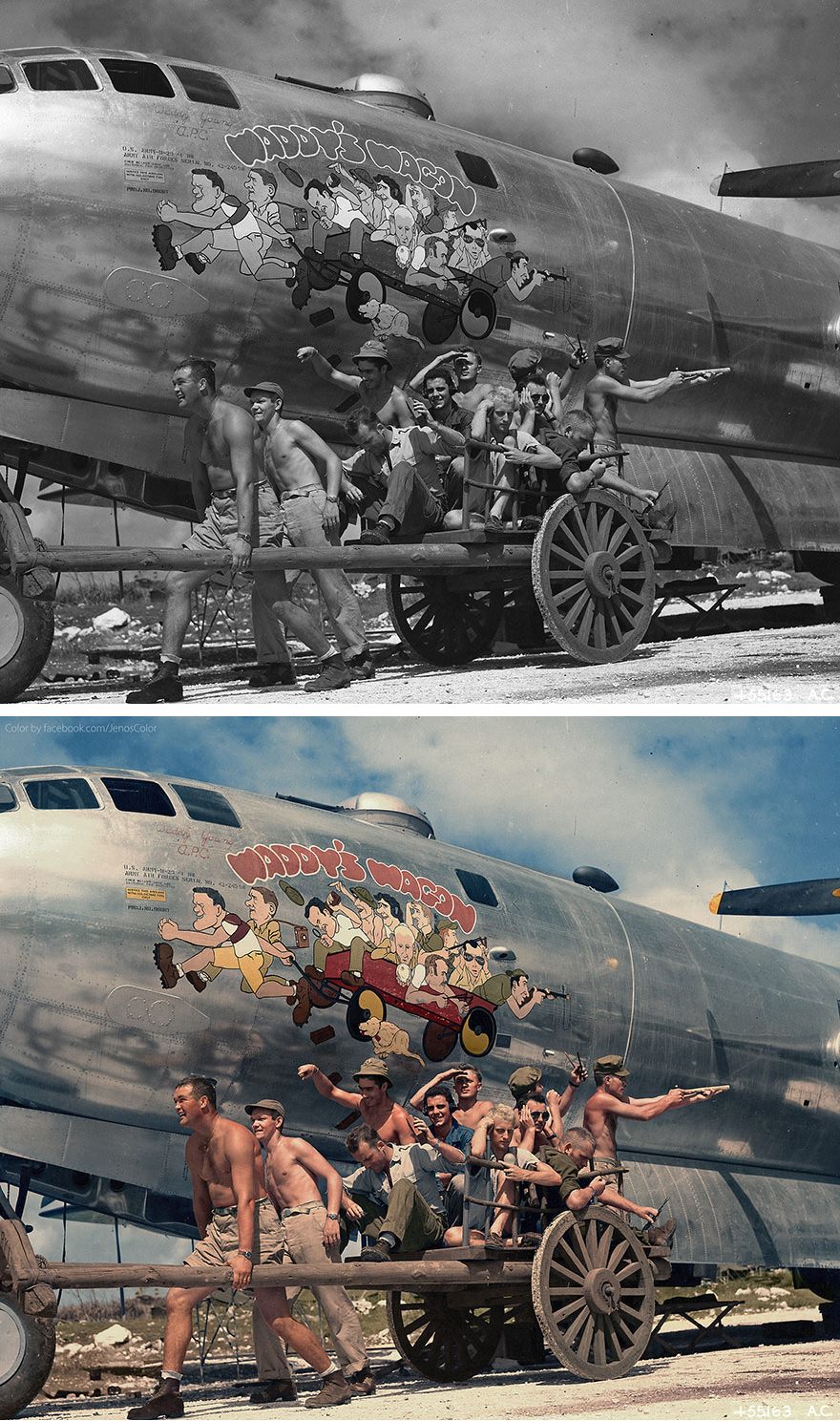
Pinned against the polished aluminum of a B-29 Superfortress, Captain Walter “Waddy” Young’s crew stages a boisterous pose beneath their plane’s nose art, a bold cartoon mural that reads “Waddy’s Wagon.” The men crowd onto a wooden cart with big spoked wheels, some shirtless in the heat, others leaning in with grins and mock-serious gestures, turning the flight line into a moment of theater. Overhead, the caricatures mirror the crew’s personality—humor and swagger painted onto the aircraft’s skin.
Details in the fuselage—rows of rivets, cockpit glazing, and the sweeping curve of the bomber’s forward section—anchor the scene in the distinctive look of late–World War II heavy aviation. The nose art itself is a small wartime gallery: lively figures packed into a wagon, suggesting an inside joke made public, a mascot for long missions and longer days. Even without a stated location, the hard-packed ground, scattered debris, and open sky evoke the working rhythms of an active airfield.
A colorization accompanies the original photograph, offering a different way to read the same moment by restoring tones to uniforms, skin, and paintwork while keeping the period texture intact. Together, the black-and-white image and the colorized version invite a closer look at crew identity and morale, and at how bomber crews personalized the B-29 Superfortress beyond serial numbers and stenciled markings. For readers searching WWII aviation history, B-29 nose art, or the story behind “Waddy’s Wagon,” this post preserves a candid glimpse of camaraderie dated November 24, 1944.