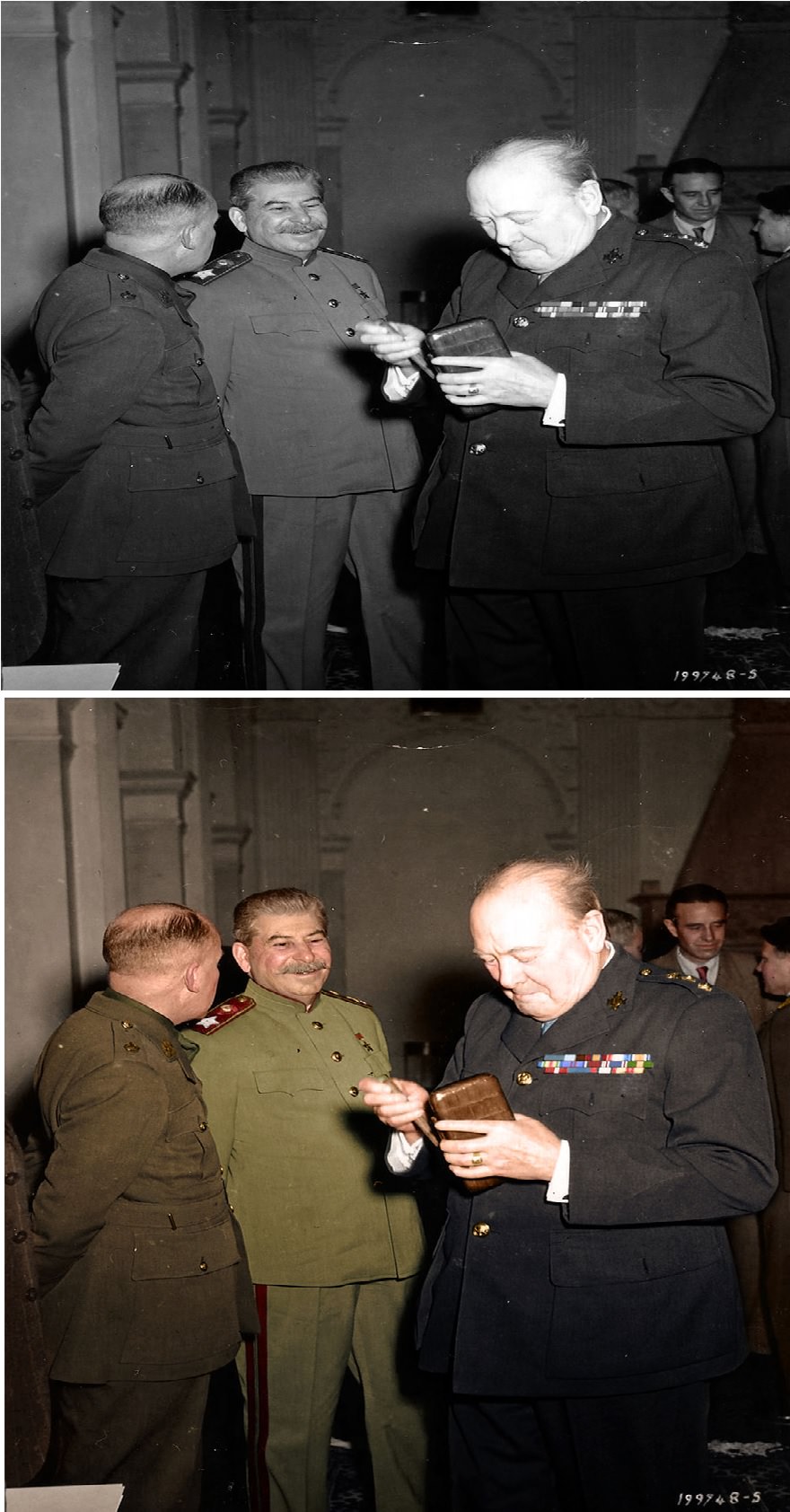
Inside the ornate rooms of the Livadia Palace during the Yalta Conference of February 1945, Joseph Stalin and Winston Churchill appear in a rare, informal moment between high-stakes meetings. Churchill, in a dark military-style jacket lined with ribbon bars, looks down as he handles a small case, while Stalin stands nearby in a lighter tunic, smiling as if mid-conversation. Other uniformed figures linger at the edges, reinforcing the sense of a guarded corridor just beyond the conference tables.
The colorization brings an added immediacy to a scene often remembered only in stark black-and-white: muted greens and browns of uniforms, warm skin tones, and the metallic glint of insignia. That restored palette highlights the contrast between Churchill’s concentrated posture and Stalin’s relaxed expression, suggesting the carefully managed blend of ceremony, persuasion, and personal performance that defined Allied diplomacy. Even the palace backdrop—arches, molding, and shadowed doorways—frames the encounter as part theater, part negotiation.
Viewed today, the photograph serves as a vivid reminder that decisions shaping the postwar world were made by people who also paused, smiled, and shuffled their belongings in crowded rooms. For readers searching Yalta Conference photos, Livadia Palace history, or colorized World War II images, this post offers a close look at the human texture behind geopolitical turning points. The restoration doesn’t change the past, but it can sharpen our attention to the atmosphere in which it unfolded.