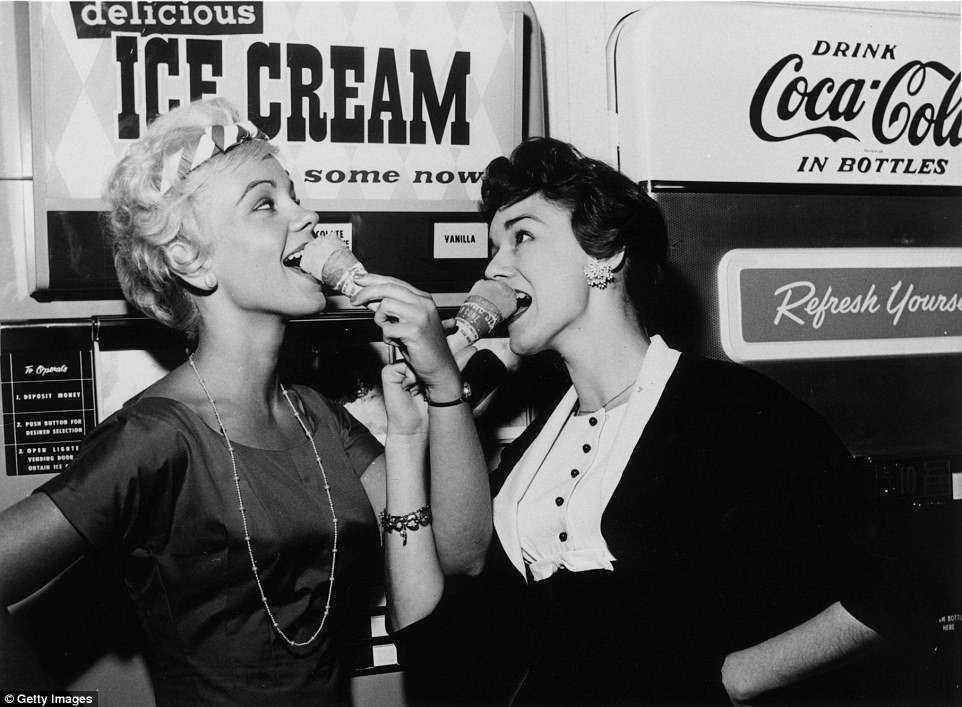
Bright block letters shout “delicious ICE CREAM” above a pair of smiling women enjoying cones right in front of the machine, an ad-like moment that turns a simple snack into a small spectacle. Nearby signage for “Drink Coca-Cola in bottles” hints at the mid-century push toward convenient, self-service refreshments, where branding and appetite worked hand in hand. The scene is playful, but it also quietly celebrates a new kind of everyday technology—dessert at the press of a button.
By 1952, vending machines had already learned the trickier chores of keeping liquids hot or cold, yet frozen treats demanded a stricter promise: hold the temperature, hold the texture, hold the pleasure. Ice cream can’t merely be cooled; it must stay frozen through changing room heat, frequent door openings, and constant use. That requirement pushed engineers and manufacturers to refine insulation, refrigeration cycles, and reliable dispensing, making the ice cream vending machine a standout in the broader story of postwar consumer inventions.
Behind the glamour of glossy signage and smiling customers sits a bigger shift in daily life: more automation in public spaces and more confidence that machines could deliver consistent quality. These early frozen vending solutions helped normalize “anytime” treats in workplaces, transit hubs, and shops, foreshadowing today’s ubiquitous grab-and-go culture. For readers interested in vintage technology, 1950s advertising, and the evolution of vending machines, this photo captures the moment when cold convenience went all the way to frozen.