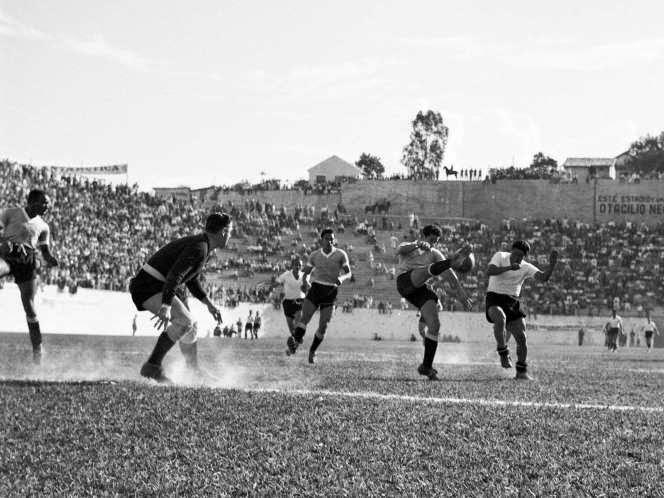
Dust kicks up from the worn grass as attackers surge toward goal, the goalkeeper crouched and bracing while defenders scramble to close space. In the stands, spectators line the terraces in dense rows, turning an open-air ground into a wall of expectation. The scene feels urgent and improvised at once—an era when football’s biggest moments could unfold on sunlit pitches with little separating players from the crowd.
Few World Cup stories are as unusual as Group 4’s lone fixture, shaped by France’s withdrawal before the tournament began and leaving Uruguay and Bolivia to decide everything in a single match. Uruguay returned to the global stage for their first World Cup since lifting the trophy in 1930, and the pressure of reputation met the reality of ninety minutes. The result, an emphatic 8–0, was driven in part by striker Óscar Míguez’s hat trick and sent the Uruguayans onward to the second group stage.
What makes this historical sports photo resonate is how it compresses tournament politics, national pride, and pure athletic execution into one frozen instant. The uniforms, the packed terraces, and the raw texture of play evoke mid-century World Cup football at ground level, where tactics and tenacity played out in full view. For readers searching World Cup history, Uruguay vs Bolivia, or Óscar Míguez’s defining performance, this image anchors the narrative in the grit and speed of the match itself.