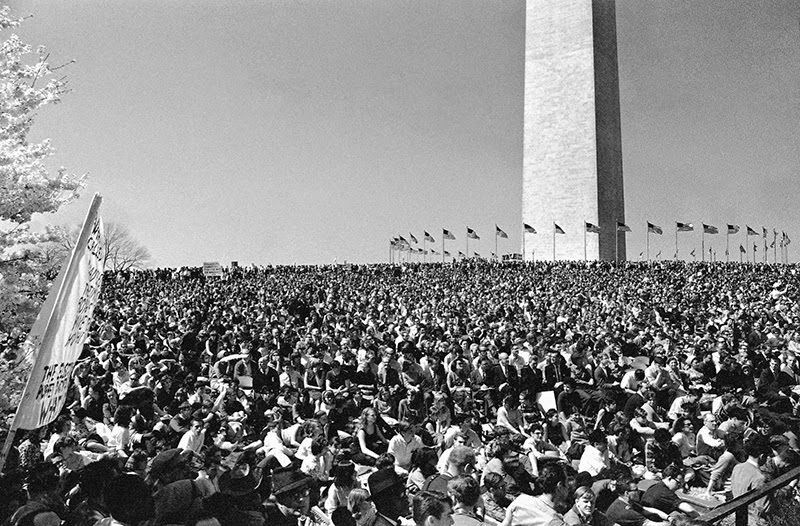
A vast crowd spreads across the grass beneath the Washington Monument, packed shoulder to shoulder as flags ripple in a long line above them. Some people sit, others stand and lift signs, turning a familiar civic landscape into a sea of faces and raised hands. Even without reading every placard, the scale of the gathering speaks to a nation arguing with itself in public.
Scenes like this sit at the heart of any honest Vietnam War photo collection, because the conflict was fought not only in Southeast Asia but also in streets, campuses, and national landmarks back home. As the Cold War struggle between capitalism and communism intensified, images of mass demonstrations became part of the war’s visual record—evidence of fear, anger, grief, and moral urgency. The crowd’s density and stillness carry their own kind of tension, suggesting how deeply the war cut into everyday life.
In a post titled “The Vietnam War: 50+ Striking Photos Show The Horror Of Bloodiest War Between Capitalism And Communism,” photographs like this help trace the war’s human cost beyond the battlefield. They remind readers that the Vietnam War era was defined by mobilization—soldiers overseas, families waiting, and citizens demanding change. Taken together, these historical photos don’t just illustrate events; they preserve the atmosphere of a divided time and invite a closer look at how public memory was forged.