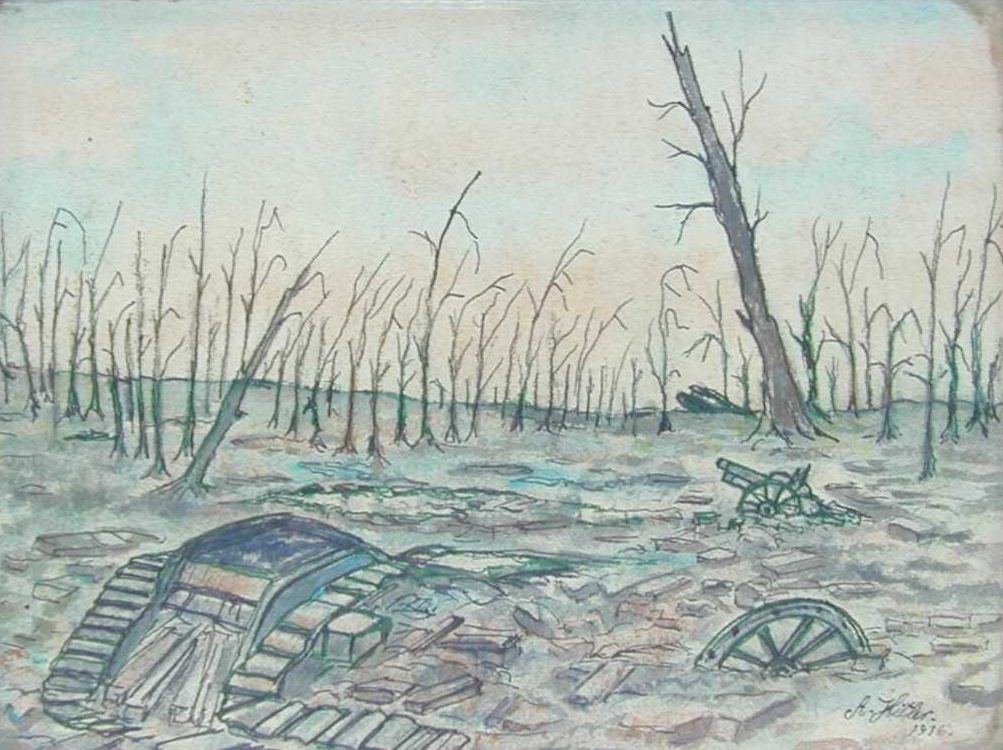
Half-buried in churned earth, the wreck of a tank sits like a stranded creature, its tracks and hull swallowed by mud and rubble. Bare, splintered trees crowd the horizon, their thin branches reaching into a washed-out sky that feels as exhausted as the landscape. Scattered nearby, a broken wheel and scattered debris suggest how thoroughly this ground has been worked over by heavy fire and constant movement.
Rather than celebrating machinery, “Destroyed Tank” lingers on what remains after the engines stop: silence, shattered timber, and the slow reclamation of steel by soil. The artist’s subdued palette and careful linework give the scene a stark clarity, turning battlefield wreckage into an artwork of memory and loss. It’s a visual reminder that armored power, so often treated as unstoppable, can become just another obstacle in a ruined field.
For readers drawn to military history, wartime art, and historical photos and illustrations, this post offers a searching look at the aftermath of combat without leaning on heroics. Details like the collapsed silhouette of the vehicle and the stripped, lifeless tree line help ground the image in a wider story of industrial war and its scars on the land. Whether you’re researching tanks, battlefield destruction, or the way artists documented war, this piece invites a slower, closer read of what destruction leaves behind.