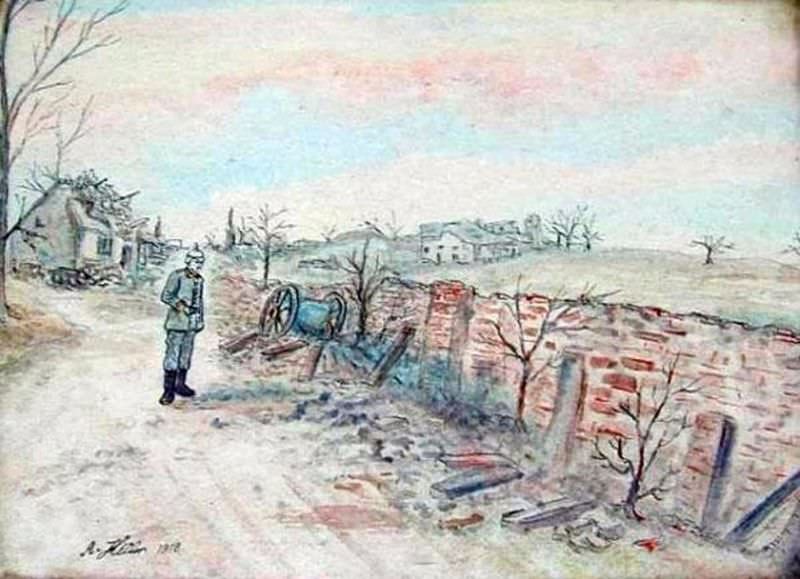
Along a quiet rural lane, a long stone wall runs broken and scarred, its pale masonry catching the light while winter-bare trees cling to the edge like witnesses. A lone uniformed figure pauses in the foreground, dwarfed by the open fields and scattered farm buildings that stretch into the distance. The mood feels suspended between aftermath and remembrance, as if the landscape itself is still listening for echoes.
Near the wall, a damaged cannon lies at an angle, half-sunk into churned earth, turning this pastoral scene into a battlefield relic. The fallen timbers and rough debris suggest hurried fortification and sudden collapse, while the wall’s length hints at how such everyday structures could become defensive lines. In this artwork, the ordinary infrastructure of countryside life—roads, fences, and field boundaries—quietly transforms into a record of conflict.
“Battlefield Wall” invites closer reading of small details: the posture of the solitary soldier, the emptiness of the road, and the stark contrast between open sky and battered ground. For readers interested in military history art, battlefield landscapes, and the visual language of remembrance, the image offers an evocative study of how war marks a place long after the fighting moves on. It’s less about a single moment of combat and more about what lingers—ruins, silence, and the stubborn continuity of the land.