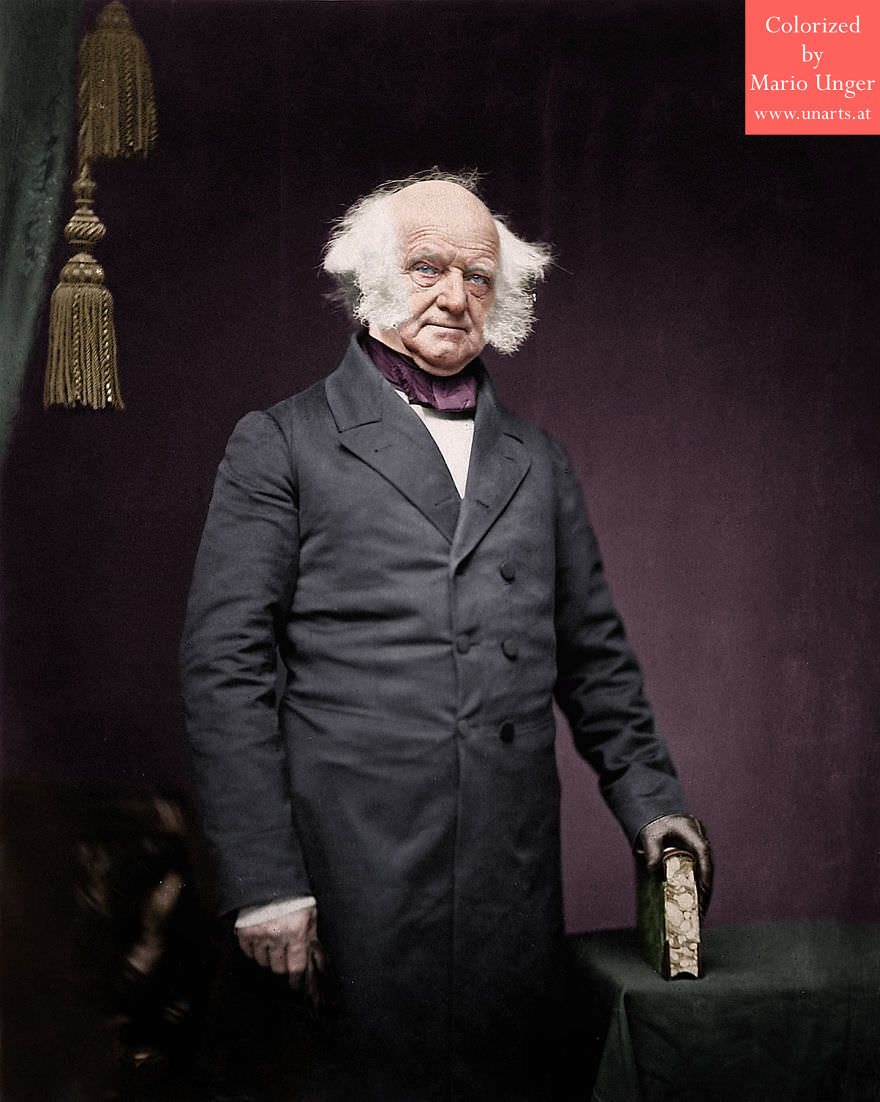
Martin Van Buren stands with a guarded, statesmanlike calm, his gaze fixed forward beneath a high forehead and distinctive white side whiskers that frame his face. The colorization draws the eye to the deep tones of his formal coat and the muted richness of the backdrop, turning what might feel distant in monochrome into something immediate and human. Small studio details—like the tassel to one side and the draped table—hint at the careful staging used to project authority in early American portrait photography.
Marked “1837” in the title, the portrait invites viewers to think about the moment when Van Buren stepped into the nation’s highest office and faced the expectations that came with it. His upright posture and measured expression fit an era when leadership was communicated as much through restraint as through rhetoric. Even without additional context on the sitting, the image offers a window into how political identity was shaped for public memory.
As a historical photo enhanced through colorization, this post highlights both the visual culture of the nineteenth century and the modern effort to make archival images more accessible. Seeing Van Buren rendered in lifelike hues emphasizes textures—cloth, skin, and shadow—that help today’s audience read the portrait with fresh attention. For readers searching for Martin Van Buren 1837, early presidential portraiture, or colorized American history photos, it’s a compelling reminder that the past was once as vivid as the present.