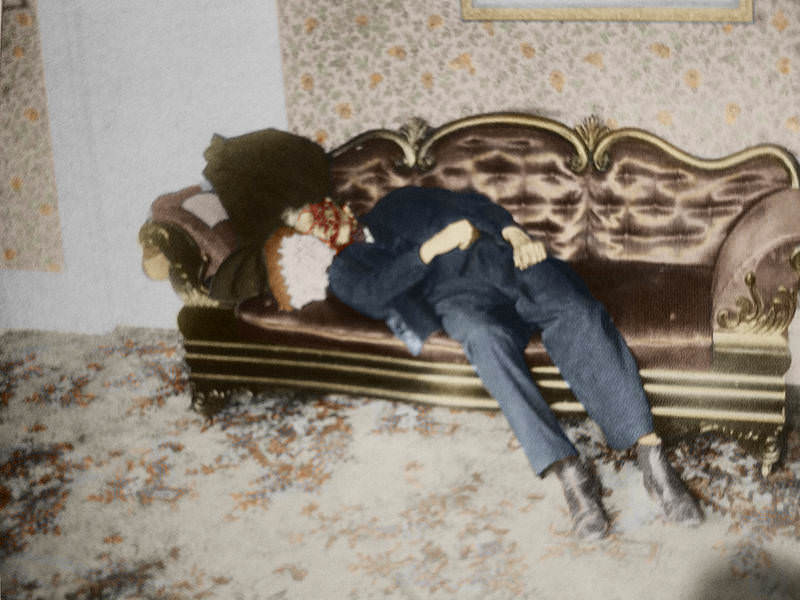
A parlor sofa becomes an unmistakable crime-scene tableau in this colorized view from the Borden house in Fall River, Massachusetts, where Andrew Borden’s body lies slumped across the upholstery. The patterned wallpaper and carpet, the carved wood frame, and the formal clothing all speak to a late-19th-century domestic interior—ordinary furnishings made abruptly uncanny by the violence that has entered the room.
Colorization adds an unsettling immediacy: the dark fabric of the suit, the warm tones of the furniture, and the pale wall behind it pull the eye toward the stillness of the figure. Rather than feeling distant and archival, the scene reads almost present-tense, inviting viewers to notice the small details of the home that newspapers and court testimony would later turn into widely debated evidence.
As part of the enduring Lizzie Borden story, this historical photograph (presented here in color) anchors the legend in the physical reality of the house and its rooms. For readers searching the Andrew Borden death photo, the Fall River Borden home, or 1892 crime photography, the image offers a stark reminder of how quickly a private space can become public history—and why this case continues to haunt American true-crime memory.