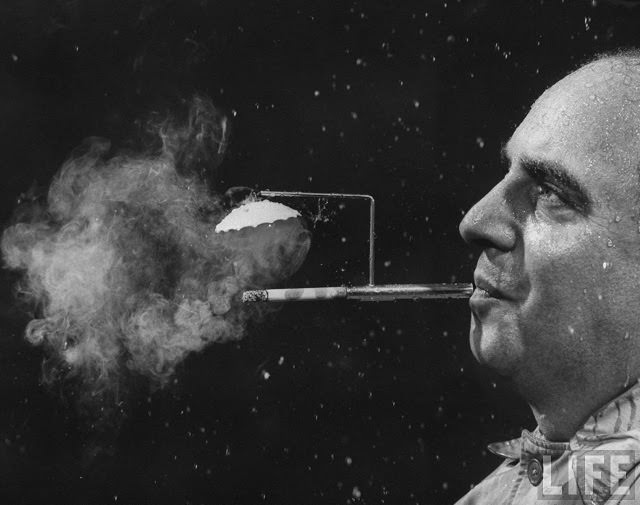
Raindrops glitter in the dark as a man leans into the weather with a cigarette set firmly between his lips, and a curious little frame projects outward like a minimalist umbrella. The contraption is so small it feels almost comical, yet it’s plainly meant to solve a real nuisance: keeping tobacco dry and lit when the sky won’t cooperate. Smoke curls around the device, turning the scene into a neat blend of practicality and spectacle.
In the spirit of early everyday inventions, this “umbrella holder for rainy days” reads like a snapshot of problem-solving on the fly—one part personal comfort, one part street-level engineering. Instead of sheltering the whole person, the design focuses on a single habit, suggesting a time when inventors and tinkerers chased small efficiencies as eagerly as grand breakthroughs. The close-up composition emphasizes texture and function: wet skin, drifting vapor, and the stark geometry of a rain shield sized for a match and ember.
Oddball gadgets like this have a way of revealing social history in miniature, hinting at how ordinary people adapted to climate, clothing, and public life before disposable convenience took over. For readers who love invention history, novelty patents, and quirky solutions to daily problems, the photo is a reminder that innovation often starts with irritation—wind, rain, and the desire to carry on uninterrupted. Even without a known name or place attached, the image stands as a memorable piece of ingenuity with strong vintage appeal for any archive of historical technology.