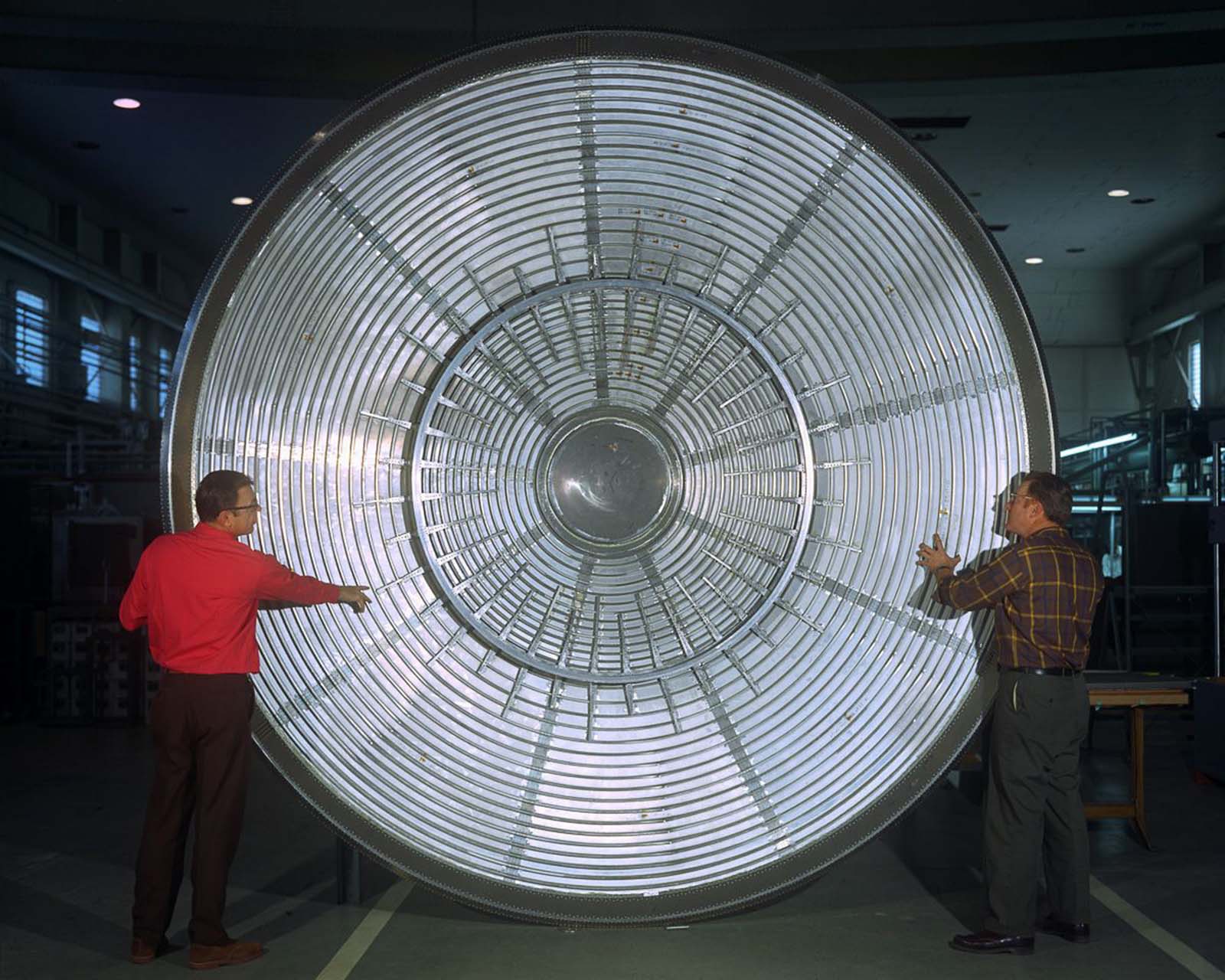
A huge, dish-like structure dominates the frame, its concentric ribs and reflective surface turning an engineering component into something almost architectural. Two technicians stand at either side for scale, their gestures drawing the eye toward the aeroshell’s broad face and the smaller circular section at its center. Seen head-on, the hardware feels both simple in outline and intricate in detail—built to meet the brutal physics of atmospheric entry.
In 1973, the Viking program’s success depended on more than rockets and radio signals; it hinged on a protective shell that could shepherd a delicate lander through heating, pressure, and turbulence on the way to Mars. The aeroshell functioned as a sacrificial guardian, managing heat and aerodynamics so the spacecraft inside could survive the most violent moments of the journey. What looks like a clean, orderly pattern of rings in this photo represents careful design choices about airflow, strength, and thermal protection.
For readers searching the history of space exploration technology, this image offers a rare, grounded view of planetary entry hardware before it ever met the Martian atmosphere. The workshop setting—lights overhead, industrial surroundings, and human figures measuring by eye—reminds us that interplanetary exploration is assembled piece by piece on Earth. It’s a compelling snapshot of invention in practice: the quiet, meticulous work behind one of NASA’s most celebrated Mars lander missions.