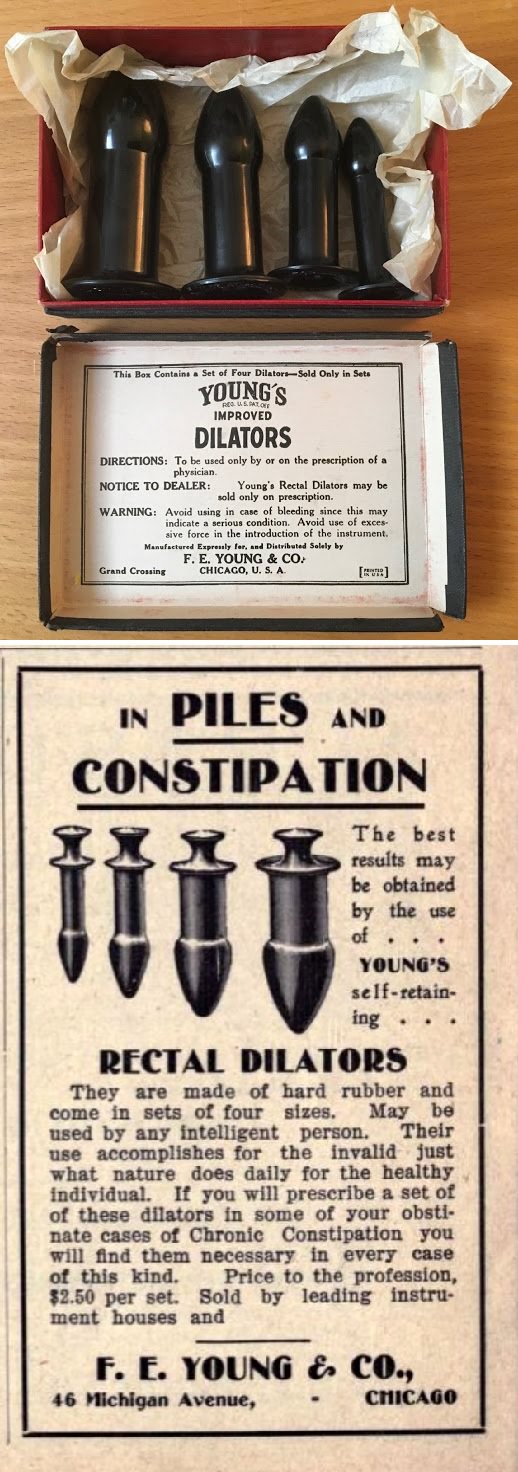
Tucked into a red-edged box lined with crinkled paper sits a four-piece set of “Young’s Improved Dilators,” each molded in glossy black hard rubber and shaped in graduated sizes. The labeling on the case stresses controlled, physician-directed use, underscoring how intimate medical devices were packaged with the authority of instructions, warnings, and brand identity. Even without a clear date, the materials and presentation evoke an era when rubber goods and precision molding promised modern comfort and scientific reliability.
Across the accompanying advertisement, the language is bluntly clinical and aggressively practical, tying the product to common complaints like piles and constipation while insisting on “best results” and dependable everyday relief. The pitch balances discretion with confidence: it is sold as a set, described as self-retaining, and framed as a tool that can do for the “invalid” what nature supposedly accomplishes for the healthy. Together, the photo and printed copy offer a window into how medical marketing normalized awkward subjects through typography, diagrams, and an air of professional endorsement.
Dr. Young’s Ideal Rectal Dilators, as presented here, belong to a broader history of inventions that straddled the line between medical instrument and consumer commodity. The combination of boxed kit, clear branding, and carefully worded cautions reflects a marketplace where home treatment and physician oversight overlapped rather than neatly separated. For readers interested in the history of healthcare, rubber instruments, and early medical advertising, this image preserves the tangible, uncomfortable reality behind period promises of improved health.