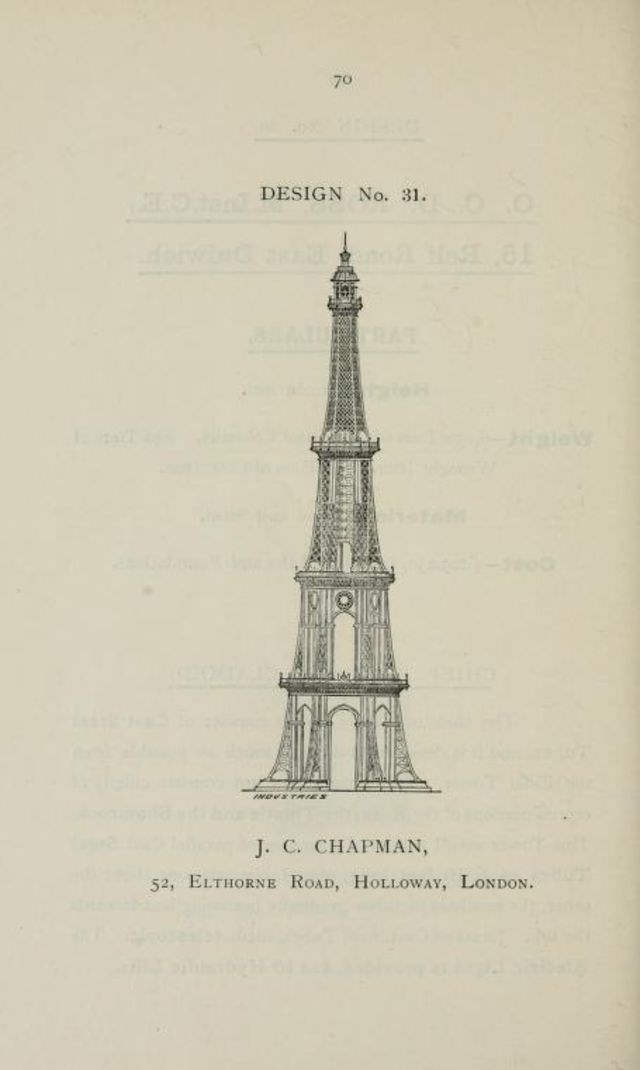
Numbered “DESIGN No. 31.” at the top of the page, this proposal for a “Great Tower for London” places a slender, tapering spire above a tiered base of arches and galleries, balancing spectacle with a sense of structural order. Fine linework suggests an iron-lattice body wrapped in decorative bands, while the lower stages read almost like a monumental gateway—an invitation to pass beneath and look up. Even on paper, the concept aims for height, visibility, and civic drama, the very qualities that drove late‑Victorian fascination with engineering showpieces.
Printed in a style familiar from period design competitions, the sheet also preserves its maker’s identity in plain typography: “J. C. CHAPMAN, 52, Elthorne Road, Holloway, London.” That detail grounds the grand ambition in everyday London life, reminding us that these contests were not only for famous firms but for individuals eager to turn invention into opportunity. The surrounding blank space and centered elevation keep the viewer’s attention fixed on the tower’s silhouette, as if it were already rising above the city skyline.
More than an architectural curiosity, this page belongs to the wider story of 1890s innovation—when public imagination, new materials, and competitive design culture collided. The “50+ competitive designs” mentioned in the post title hints at a crowded field of rival visions, each trying to define what a modern London landmark should look like. For readers exploring Victorian inventions and proposed monuments, this surviving drawing offers a crisp glimpse of ambition on the drafting table: an unrealized tower concept that still speaks to the era’s hunger for progress.