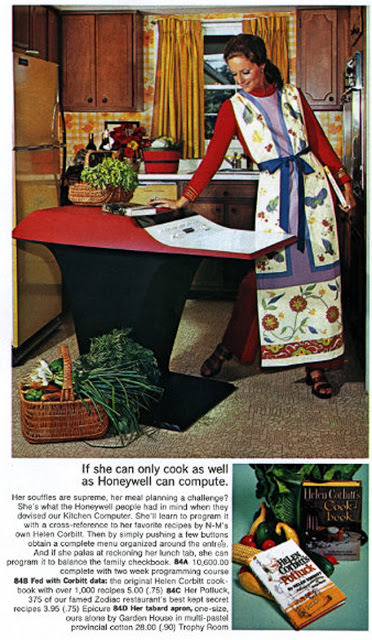
Bright magazine color and mid‑century domestic optimism frame Honeywell’s bold promise: a “kitchen computer” priced like a luxury car. In the photo, a homemaker in a patterned apron leans over a sleek, angular console that looks more like futuristic furniture than an appliance, its broad red top turning the kitchen into a showroom for tomorrow. Wood cabinets, a harvest‑tone curtain, and baskets of produce surround the machine, grounding this high-tech dream in the everyday rituals of meal planning.
What made the $70,000 Honeywell Kitchen Computer so fascinating wasn’t just the sticker shock, but the way it marketed computing as a household convenience long before the personal computer era. The advertisement copy leans into the idea that recipes, shopping lists, and menu choices could be “computed,” suggesting an orderly, automated domestic life powered by electronics rather than intuition and handwritten notes. Even without modern screens and familiar interfaces, the design signals status and progress—technology as a statement piece meant to be admired as much as used.
For readers interested in inventions and retro tech history, this image is a vivid snapshot of how the 1960s imagined the future arriving through the kitchen. It also highlights the gap between aspiration and practicality: a room filled with fresh herbs and vegetables alongside a machine few could afford and fewer could comfortably operate. Seen today, the Honeywell Kitchen Computer stands as a charming, ambitious precursor to the smart appliances and recipe apps that finally made the “computerized kitchen” idea feel ordinary.